Home & Garden
Silverfish in the House: They Follow Damp, So Start With the Humidity

Why are there silverfish in my house?
Because the house has somewhere dark, damp and rarely disturbed, and something starchy to eat. That’s what silverfish look for. Silverfish in the house don’t mean the house is dirty, and one in the bath is no exception. It’s a sign that a space nearby is probably holding more moisture than it should. The rest of this post answers the questions that come next: whether they’re harmful, what they eat, how they got in, what actually helps, and when to ring a professional.
The answers come from a Victorian Department of Health technical note on silverfish, two sections of the Western Australian Museum’s collections care manual, and a Royal Museums Greenwich article. Museums have to deal with these insects in paper and textile collections, so their advice is worth reading even though a home isn’t a museum.
Are silverfish harmful?
To belongings, yes. To people, the sources don’t say so. The Victorian note says silverfish are considered a pest because they can cause extensive damage to valuable items such as photographs, books and other records that can’t easily be replaced. The note describes damage to belongings and says nothing about a risk to health. This post doesn’t claim one either.
What do they look like? The note gives a typical length of 13 to 25 mm. They’re silvery-grey, flattened and covered in scales, with long antennae and three tail appendages. Newly hatched silverfish are white, so a pale, tiny one is still the same insect.
Where do you find them? Often in the bath or the sink. The note explains why: they can’t climb smooth surfaces, so one that ends up in a bathtub or sink can’t get out again.
The same note says there are about 28 species in Australia, and five are commonly found in buildings. You don’t need to tell them apart to act on this post, because the advice is the same for all of them.
What do silverfish eat?
Starch, mostly. The note says silverfish feed on most human food, but they prefer starchy materials. It lists books and book bindings, glue, paper, photographs, carpet, clothes, cotton and wallpaper.
The Western Australian Museum manual puts it in the language of collections. Silverfish feed on cellulosic materials such as paper, sizing, glue, cotton and rotting wood. It calls the silverfish the most common pest found in paper and textile collections, and warns that if unchecked, these species can seriously damage books, drawings, prints and cotton fabrics.
Put those two lists side by side and the household version is easy to build. Think of the places where paper and cotton are stored: a bookshelf, a box of photographs, a linen cupboard, a wardrobe. Those are the places the sources point to.
Why have they turned up?
Because of where they live. The note says silverfish are nocturnal. Their natural habitat is under bark, in soil, in rotting logs and in leaf litter. In buildings, the note lists roof and wall voids, and cupboards, wardrobes and bookshelves with a high humidity level. It describes the places they prefer as dark, damp and rarely disturbed. The museum manual describes the same kind of spot in four words: dark, quiet, humid and secluded. A cupboard nobody opens fits all four.
The museum manual says the same thing from a different direction. Insects such as silverfish and crickets may indicate a high humidity problem, which should be investigated. So a silverfish is a clue as well as a nuisance. It points to moisture somewhere near it.
Is there a number for “too damp”? There is one in the sources, with a catch. The Royal Museums Greenwich article describes insects that only thrive in very moist conditions, higher than 75 per cent relative humidity, and names silverfish and booklice among them. It also says silverfish are found in tiled bathrooms. That 75 per cent figure comes from a museum in the United Kingdom, talking about collections. It isn’t a household target, and the sources don’t give one. If you’d like to know what a room’s humidity actually is, a hygrometer reads relative humidity. That’s plain advice, not something the sources require.
Why can one sighting mean a long-running problem? The note gives the numbers. It puts egg numbers at about 50, hatching in 2 to 8 weeks. Silverfish take from 3 months to 2 years to mature, and they can live up to 4 years. The museum manual also says up to four years. An insect that lives that long, in a space nobody disturbs, can be there for a while before the first one turns up in a bathtub.
What actually works?
Start with an inspection. The note says a thorough inspection is a prerequisite to treatment. That means moving and opening the things stored in the likely spots: the boxes, the shelves, the wardrobe floor. Where you suspect them, the note says sticky traps or looped sticky tape show the extent of the problem. A trap with several on it and another with none starts to show where they’re moving.
The museum manual sets the same standard for a collection: if a silverfish is detected, inspect the whole collection and treat as appropriate. For a household, the whole collection is every shelf, box and drawer where paper and cotton are kept, not only the spot where the first one was found.
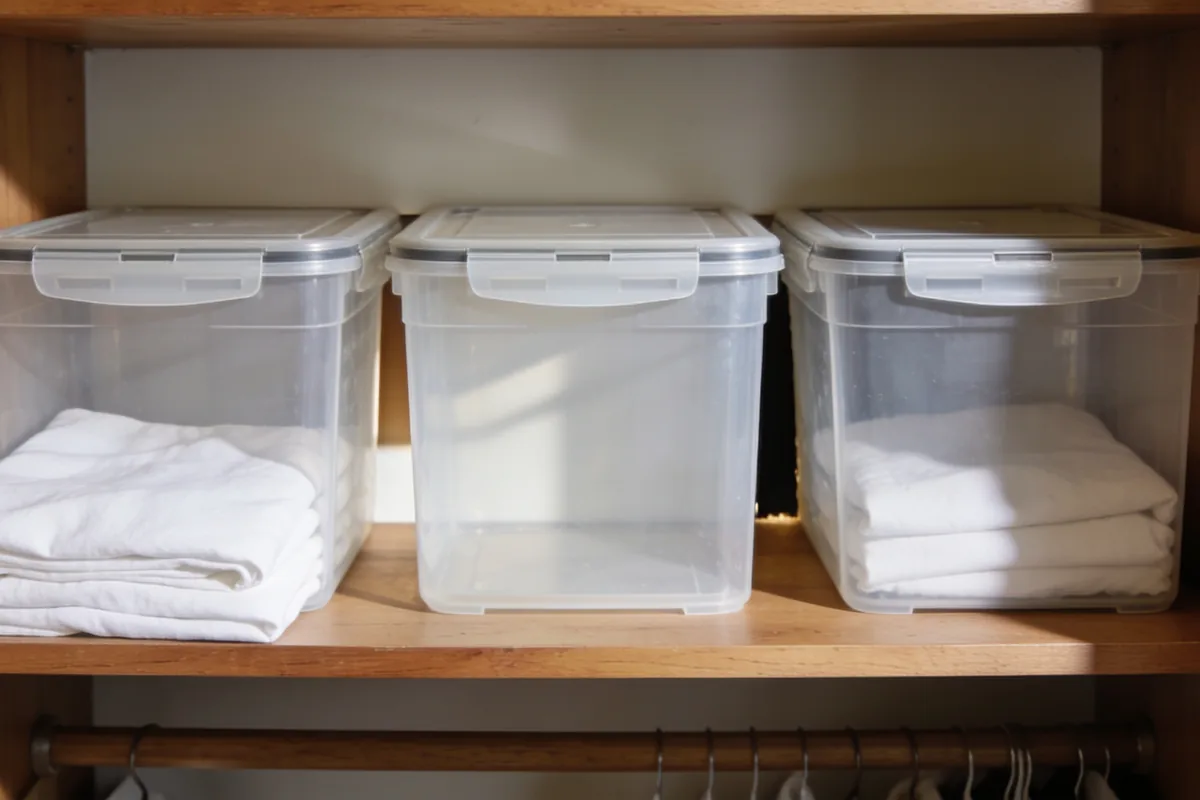
Then protect what they eat. The note’s non-chemical advice is to keep items such as books, papers and photographs secured in dry conditions, sealed in bags or tight-lidded boxes. It is the simplest idea in the sources, and it goes straight at the food side of the problem.

The museum manual adds a way to keep track. It recommends plain sticky traps near doors, windows, drains, food areas and heat, air and water sources. Each trap is marked with a number and the date, and the traps are checked at least every three months. That is museum-collection practice, so treat it as one way to track the problem in a home, not a rule. If you try it, a note of the date and place on each trap tells you whether the count is falling.
Then the moisture. This is the part the post’s title is about. Where a leak, a wet cupboard wall or an unvented bathroom is the cause, fixing that is the fix. The museum manual’s line that silverfish may indicate a high humidity problem, which should be investigated, is the reason to start there. The sources don’t give treatment figures or product names, and this post doesn’t either.
A quick order of work, then. Look first. Seal the paper and cotton. Find the damp. Check the traps again in a few weeks.
What about sprays and home remedies?
Here’s what the sources say. The Victorian note’s control section, as published, covers inspection and non-chemical measures only. It has a heading for non-chemical control and nothing under a chemical one.
That leaves popular remedies such as bay leaves, cedar and mothballs. The sources behind this article don’t address them. Company pages and online advice repeat them often, but a remedy that’s repeated isn’t the same as one that’s been shown to help, and this post won’t say either way.
If you choose to use a product, use it only as its label directs. That is plain advice, and the product’s own label is the authority on how it’s used.
None of this means a product is never reasonable. It means the sources here stop at inspection and non-chemical measures. For anything beyond them, the label and a licensed pest manager are the people to ask, and the next section covers when to do that.
There’s a fair point on the other side, and it deserves a straight answer. Cutting humidity isn’t always easy in a rented or older house. You can’t always change a bathroom’s ventilation or repair a wall. If that’s your situation, sealed storage still helps the things you care about most, and a persistent problem is a reason to call a professional, which is the next section.
When to call a licensed pest manager
Some situations are beyond a weekend job. Call a licensed pest manager if sightings continue after you’ve moved paper and cotton into sealed, dry storage and dealt with obvious moisture. Call one if you find them in roof or wall voids, because the note lists those as places they live and you can’t reach them easily. And call one if damage to belongings is spreading.
What should you note before ringing? Four things help.
- Where and when each silverfish was seen.
- What has been chewed, and on what.
- The room’s damp history: leaks, condensation, a wall that stays wet.
- What you’ve already tried, including any traps and what they caught.
Those notes save time on the phone, and they let the pest manager see the pattern you’ve been looking at. This post doesn’t name a company or give a cost, because the sources don’t.
Where to Start With Silverfish
Find the damp. Seal the paper and cotton. Check again in a few weeks.
Sources: Victorian Department of Health, Silverfish, Pesticide Safety Technical Note 22, December 2024 (https://www.health.vic.gov.au/sites/default/files/2025-01/technical-note-number-22-silverfish.pdf); Western Australian Museum, Collections care manual, Appendix 4: Insect Pests (https://manual.museum.wa.gov.au/book/export/html/164/); Western Australian Museum, Collections care manual, Integrated pest management (http://manual.museum.wa.gov.au/integrated-pest-management/); Royal Museums Greenwich, Museum pests: what are they and how do we stop them (https://www.rmg.co.uk/stories/art-culture/museum-pests-what-are-they-how-do-we-stop-them)