Home & Garden
Gutter Overflowing in the Rain? Where to Look First

A gutter overflowing in heavy rain is one of the most ordinary household worries, and it’s usually a smaller job than it looks from the ground. Nothing has failed. The water has simply found the quickest way out of a channel that’s carrying more than it can pass, and there’s normally a plain reason for that.
You might find it helps to take one step and leave the rest for later. The step is to watch.
Watch where the water leaves
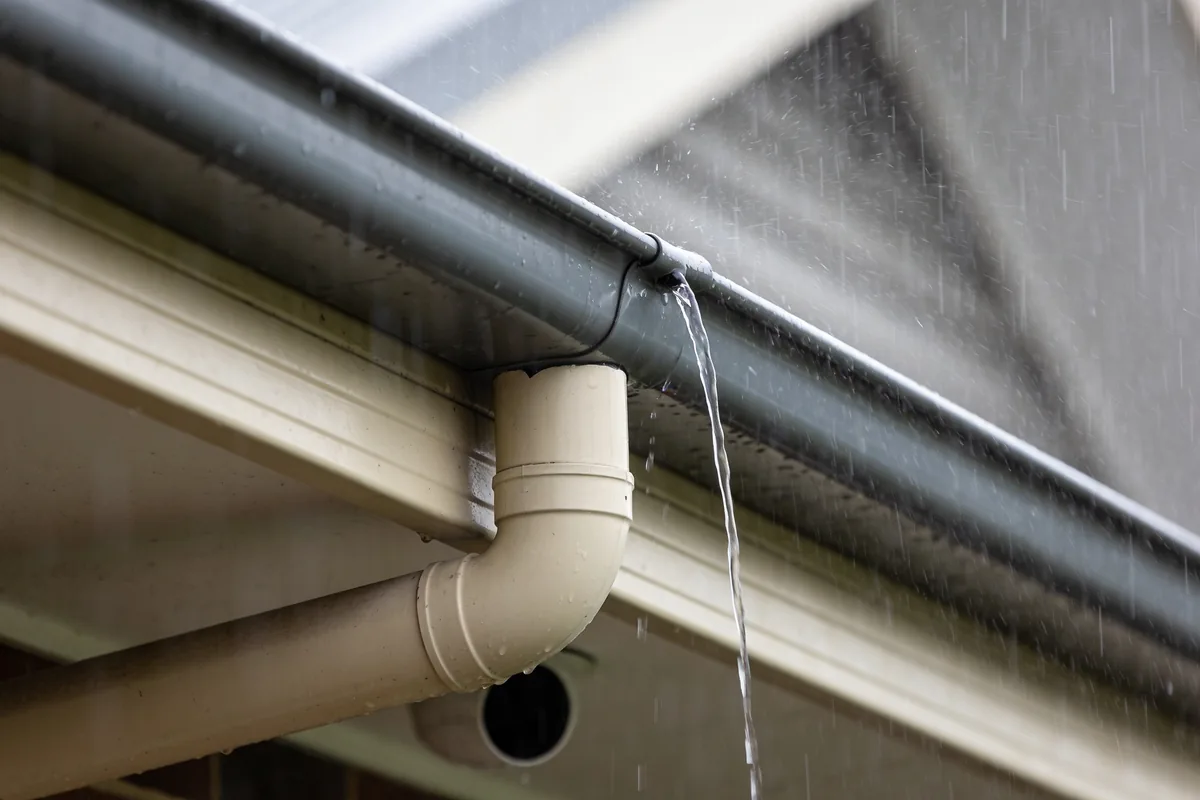
On the next proper shower, stand under the veranda or at a window with a cup of tea and look at the gutter. Notice where the water comes over. If it leaves at one spot, often near a corner, a join or the top of a downpipe, something is probably holding it back right there. If it spills along the whole length, the gutter may be carrying more than it can pass, or the water may not be draining away at the far end.
Then look at where the water goes next. Does it fall clear of the wall and land on the ground, or does it run back toward the eaves and the board behind the gutter? Water that falls clear is mostly a nuisance for your path and garden. Water that tracks back toward the house is worth a closer look, and it’s worth mentioning to anyone you call. Water that sits pooled against a wall is also better sorted sooner than later.
It’s okay if you can’t tell straight away. A second shower will usually show you what the first one didn’t.

The usual cause: leaves and a slow downpipe
Most overflows come from something small. A handful of leaves and twigs at an outlet is enough to hold back a surprising amount of water, and a downpipe that has clogged near the bottom does the same job from the other end.
A hose is a gentle way to check. Run it into the gutter just above the downpipe and see whether the water clears. If it drains freely, the trouble is probably somewhere else along the run. If it backs up, you’ve found your first suspect.
You can often do this from the ground at a low section. If you’d rather use a ladder, it’s best only when you’re comfortable on one and it sits firmly on level ground. If you’d prefer not to go up at all, that’s a perfectly good reason to ask someone else, and there’s no need to feel awkward about it.
Clearing it before fire season too
Overflow isn’t the only reason to keep a gutter tidy. The Country Fire Authority lists clearing gutters and removing leaves and twigs among the basic jobs for preparing a property for the fire season. So one clear-out helps the rain leave the gutter and covers a job the fire authority lists as well.
There’s no need for a rigid timetable. Doing it regularly, and before the fire season starts, is a sensible habit, and you could pair it with a look after a windy week or a big fall of leaves.
When a gutter keeps overflowing after you’ve cleared it
If the water still comes over after the leaves are gone and the downpipe runs freely, the cause may be in the gutter itself. That isn’t your doing. Gutters that overflow again and again after cleaning are often undersized or poorly graded, and clearing leaves can’t fix that.
From the ground, you might notice:
- a section that sags or dips
- rust or gaps at the joins
- a long run with only one downpipe
- water that sits in the channel instead of moving toward the outlet
Each of these is a fault in the system, not in your housekeeping, and this is where a plumber can help. In Victoria, fabricating, installing, replacing and testing roof drainage is licensed roofing stormwater work, according to the state’s building regulator. Other states differ, so if you live elsewhere it’s worth checking with your state’s plumbing regulator before you book anyone, and it’s fair to ask whoever you call about their licence.
What to say when you ring
Three small notes make the call shorter and the answer more useful:
- Where the water overflows: one spot or the whole length.
- When it started, and whether it’s only in heavy rain.
- Whether it clears when you run a hose down the downpipe.
If you noticed the water running back toward the eaves instead of falling clear, say so. It’s one more clue, and it helps the person on the other end picture the problem.
One decision for this weekend
Will you look yourself, or call someone? Either answer is a good one. If you’re looking, pick a dry hour, keep your feet on firm ground and start at the downpipe. If you’re calling, jot down the three notes first.
The rest can wait for the next dry day.
Sources: Country Fire Authority, “Time to prepare your property for fire season” (https://news.cfa.vic.gov.au/news/time-to-prepare-your-property-for-fire-season); Victorian Building Authority, “Roofing stormwater work” (https://www.vba.vic.gov.au/registration-and-licensing/plumbing-registration-and-licensing/roofing-stormwater)