
Home & Garden
Silverfish in the House: They Follow Damp, So Start With the Humidity

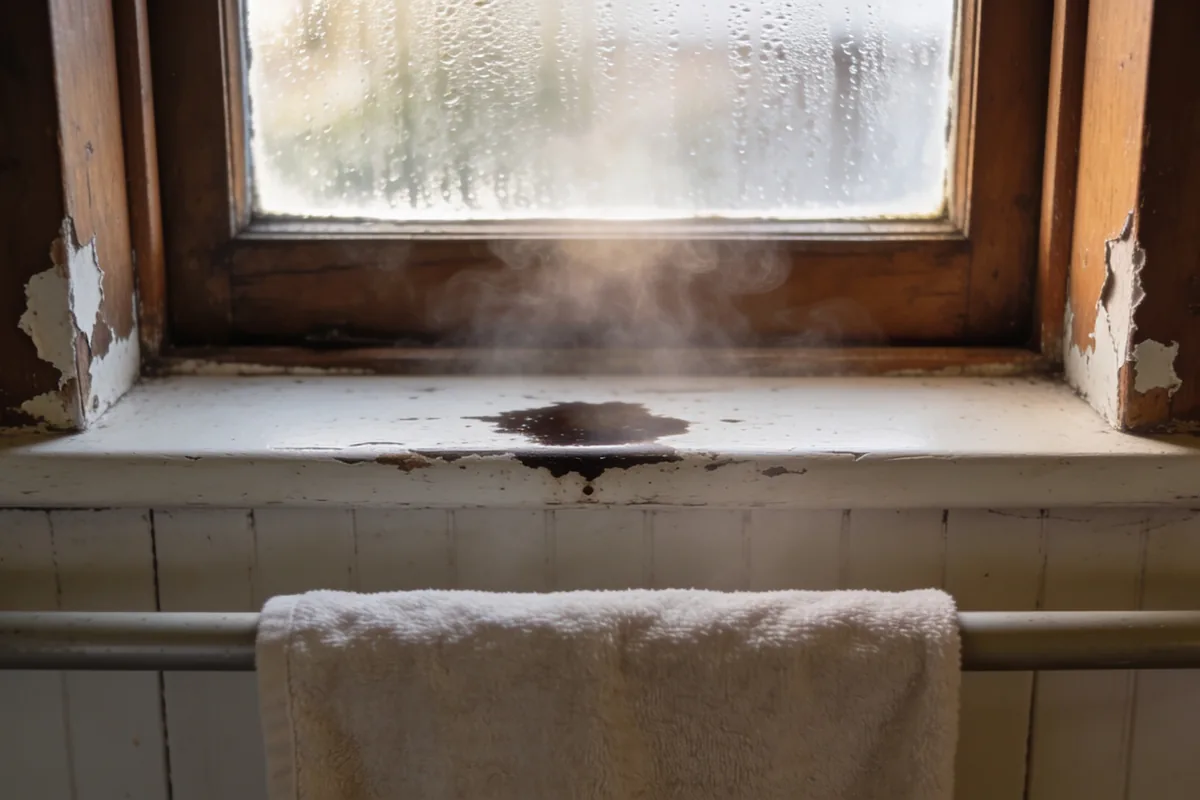
Why are there silverfish in my house?
Because the house has somewhere dark, damp and rarely disturbed, and something starchy to eat. That’s what silverfish look for. Silverfish in the house don’t mean the house is dirty, and one in the bath is no exception. It’s a sign that a space nearby is probably holding more moisture than it should. The rest of this post answers the questions that come next: whether they’re harmful, what they eat, how they got in, what actually helps, and when to ring a professional.
The answers come from a Victorian Department of Health technical note on silverfish, two sections of the Western Australian Museum’s collections care manual, and a Royal Museums Greenwich article. Museums have to deal with these insects in paper and textile collections, so their advice is worth reading even though a home isn’t a museum.
Are silverfish harmful?
To belongings, yes. To people, the sources don’t say so. The Victorian note says silverfish are considered a pest because they can cause extensive damage to valuable items such as photographs, books and other records that can’t easily be replaced. The note describes damage to belongings and says nothing about a risk to health. This post doesn’t claim one either.
What do they look like? The note gives a typical length of 13 to 25 mm. They’re silvery-grey, flattened and covered in scales, with long antennae and three tail appendages. Newly hatched silverfish are white, so a pale, tiny one is still the same insect.
Where do you find them? Often in the bath or the sink. The note explains why: they can’t climb smooth surfaces, so one that ends up in a bathtub or sink can’t get out again.
The same note says there are about 28 species in Australia, and five are commonly found in buildings. You don’t need to tell them apart to act on this post, because the advice is the same for all of them.
What do silverfish eat?
Starch, mostly. The note says silverfish feed on most human food, but they prefer starchy materials. It lists books and book bindings, glue, paper, photographs, carpet, clothes, cotton and wallpaper.
The Western Australian Museum manual puts it in the language of collections. Silverfish feed on cellulosic materials such as paper, sizing, glue, cotton and rotting wood. It calls the silverfish the most common pest found in paper and textile collections, and warns that if unchecked, these species can seriously damage books, drawings, prints and cotton fabrics.
Put those two lists side by side and the household version is easy to build. Think of the places where paper and cotton are stored: a bookshelf, a box of photographs, a linen cupboard, a wardrobe. Those are the places the sources point to.
Why have they turned up?
Because of where they live. The note says silverfish are nocturnal. Their natural habitat is under bark, in soil, in rotting logs and in leaf litter. In buildings, the note lists roof and wall voids, and cupboards, wardrobes and bookshelves with a high humidity level. It describes the places they prefer as dark, damp and rarely disturbed. The museum manual describes the same kind of spot in four words: dark, quiet, humid and secluded. A cupboard nobody opens fits all four.
The museum manual says the same thing from a different direction. Insects such as silverfish and crickets may indicate a high humidity problem, which should be investigated. So a silverfish is a clue as well as a nuisance. It points to moisture somewhere near it.
Is there a number for “too damp”? There is one in the sources, with a catch. The Royal Museums Greenwich article describes insects that only thrive in very moist conditions, higher than 75 per cent relative humidity, and names silverfish and booklice among them. It also says silverfish are found in tiled bathrooms. That 75 per cent figure comes from a museum in the United Kingdom, talking about collections. It isn’t a household target, and the sources don’t give one. If you’d like to know what a room’s humidity actually is, a hygrometer reads relative humidity. That’s plain advice, not something the sources require.
Why can one sighting mean a long-running problem? The note gives the numbers. It puts egg numbers at about 50, hatching in 2 to 8 weeks. Silverfish take from 3 months to 2 years to mature, and they can live up to 4 years. The museum manual also says up to four years. An insect that lives that long, in a space nobody disturbs, can be there for a while before the first one turns up in a bathtub.
What actually works?
Start with an inspection. The note says a thorough inspection is a prerequisite to treatment. That means moving and opening the things stored in the likely spots: the boxes, the shelves, the wardrobe floor. Where you suspect them, the note says sticky traps or looped sticky tape show the extent of the problem. A trap with several on it and another with none starts to show where they’re moving.
The museum manual sets the same standard for a collection: if a silverfish is detected, inspect the whole collection and treat as appropriate. For a household, the whole collection is every shelf, box and drawer where paper and cotton are kept, not only the spot where the first one was found.
Then protect what they eat. The note’s non-chemical advice is to keep items such as books, papers and photographs secured in dry conditions, sealed in bags or tight-lidded boxes. It is the simplest idea in the sources, and it goes straight at the food side of the problem.
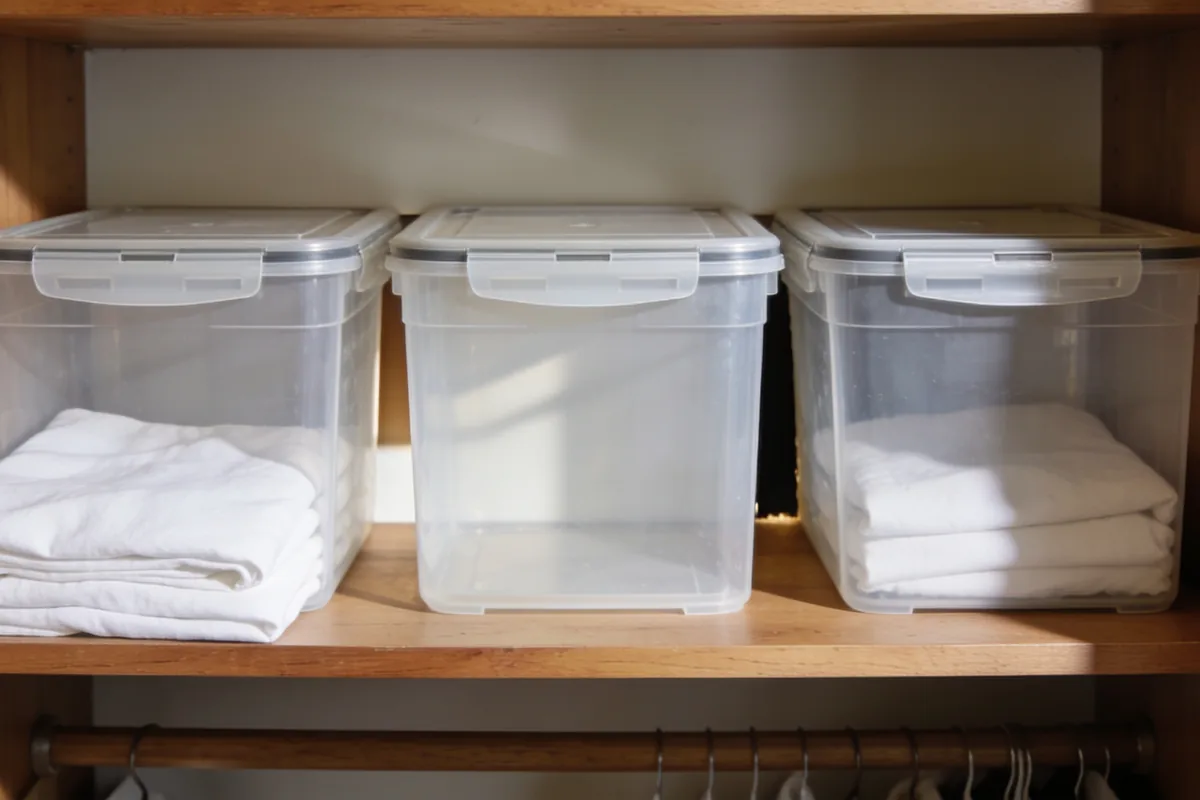
The museum manual adds a way to keep track. It recommends plain sticky traps near doors, windows, drains, food areas and heat, air and water sources. Each trap is marked with a number and the date, and the traps are checked at least every three months. That is museum-collection practice, so treat it as one way to track the problem in a home, not a rule. If you try it, a note of the date and place on each trap tells you whether the count is falling.
Then the moisture. This is the part the post’s title is about. Where a leak, a wet cupboard wall or an unvented bathroom is the cause, fixing that is the fix. The museum manual’s line that silverfish may indicate a high humidity problem, which should be investigated, is the reason to start there. The sources don’t give treatment figures or product names, and this post doesn’t either.
A quick order of work, then. Look first. Seal the paper and cotton. Find the damp. Check the traps again in a few weeks.
What about sprays and home remedies?
Here’s what the sources say. The Victorian note’s control section, as published, covers inspection and non-chemical measures only. It has a heading for non-chemical control and nothing under a chemical one.
That leaves popular remedies such as bay leaves, cedar and mothballs. The sources behind this article don’t address them. Company pages and online advice repeat them often, but a remedy that’s repeated isn’t the same as one that’s been shown to help, and this post won’t say either way.
If you choose to use a product, use it only as its label directs. That is plain advice, and the product’s own label is the authority on how it’s used.
None of this means a product is never reasonable. It means the sources here stop at inspection and non-chemical measures. For anything beyond them, the label and a licensed pest manager are the people to ask, and the next section covers when to do that.
There’s a fair point on the other side, and it deserves a straight answer. Cutting humidity isn’t always easy in a rented or older house. You can’t always change a bathroom’s ventilation or repair a wall. If that’s your situation, sealed storage still helps the things you care about most, and a persistent problem is a reason to call a professional, which is the next section.
When to call a licensed pest manager
Some situations are beyond a weekend job. Call a licensed pest manager if sightings continue after you’ve moved paper and cotton into sealed, dry storage and dealt with obvious moisture. Call one if you find them in roof or wall voids, because the note lists those as places they live and you can’t reach them easily. And call one if damage to belongings is spreading.
What should you note before ringing? Four things help.
- Where and when each silverfish was seen.
- What has been chewed, and on what.
- The room’s damp history: leaks, condensation, a wall that stays wet.
- What you’ve already tried, including any traps and what they caught.
Those notes save time on the phone, and they let the pest manager see the pattern you’ve been looking at. This post doesn’t name a company or give a cost, because the sources don’t.
Where to Start With Silverfish
Find the damp. Seal the paper and cotton. Check again in a few weeks.
Sources: Victorian Department of Health, Silverfish, Pesticide Safety Technical Note 22, December 2024 (https://www.health.vic.gov.au/sites/default/files/2025-01/technical-note-number-22-silverfish.pdf); Western Australian Museum, Collections care manual, Appendix 4: Insect Pests (https://manual.museum.wa.gov.au/book/export/html/164/); Western Australian Museum, Collections care manual, Integrated pest management (http://manual.museum.wa.gov.au/integrated-pest-management/); Royal Museums Greenwich, Museum pests: what are they and how do we stop them (https://www.rmg.co.uk/stories/art-culture/museum-pests-what-are-they-how-do-we-stop-them)

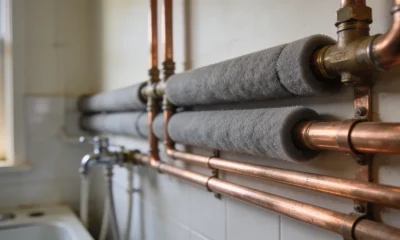
Leave the tank thermostat alone. Lowering a storage tank’s temperature below 60 degrees C is the one popular saving that isn’t safe, and it’s a common tip online.
The real savings are in using less hot water, losing less heat on the way to the tap, and heating at the right time. Four fixes do that. One tip doesn’t, and it’s the one to skip.
The test for any hot water saving
Ask one question of every tip: does it make you use less hot water, lose less heat, or pay less per unit of energy? If it does none of those, it isn’t a saving. It’s a change that looks like one.
Skip: lowering the tank temperature
A storage tank has to hold its water above 60 degrees C to stop Legionella bacteria growing, according to the Building and Plumbing Commission in Victoria. The same guide says a tempering valve keeps the water at the tap at or below 50 degrees C, which limits scalding without turning the tank down.
So the thermostat is a safety setting, not a budget dial. Systems installed before 5 August 1998 are unlikely to have a tempering valve. If you don’t know whether yours does, a licensed plumber can tell you and fit one. Rules differ by state, so this is the Victorian position, and it’s worth checking where you live.
Fix 1: use less hot water
The first lever is volume. Water-efficient showerheads and taps cut the volume that goes through the heater, and the heater has less to do. The Australian Government’s YourHome guide covers both.
Fix 2: stop the small draws
Mixer taps left in the hot position are a quiet drain. YourHome notes that small drawings of hot water often never reach the tap, so the heater has warmed water that only fills the pipe and goes cold again. For a splash of water to rinse a cup or wash your hands, put the mixer in the cold position.
Fix dripping hot taps too. A drip is hot water you’ve paid to heat and nobody has used.
Fix 3: lose less heat
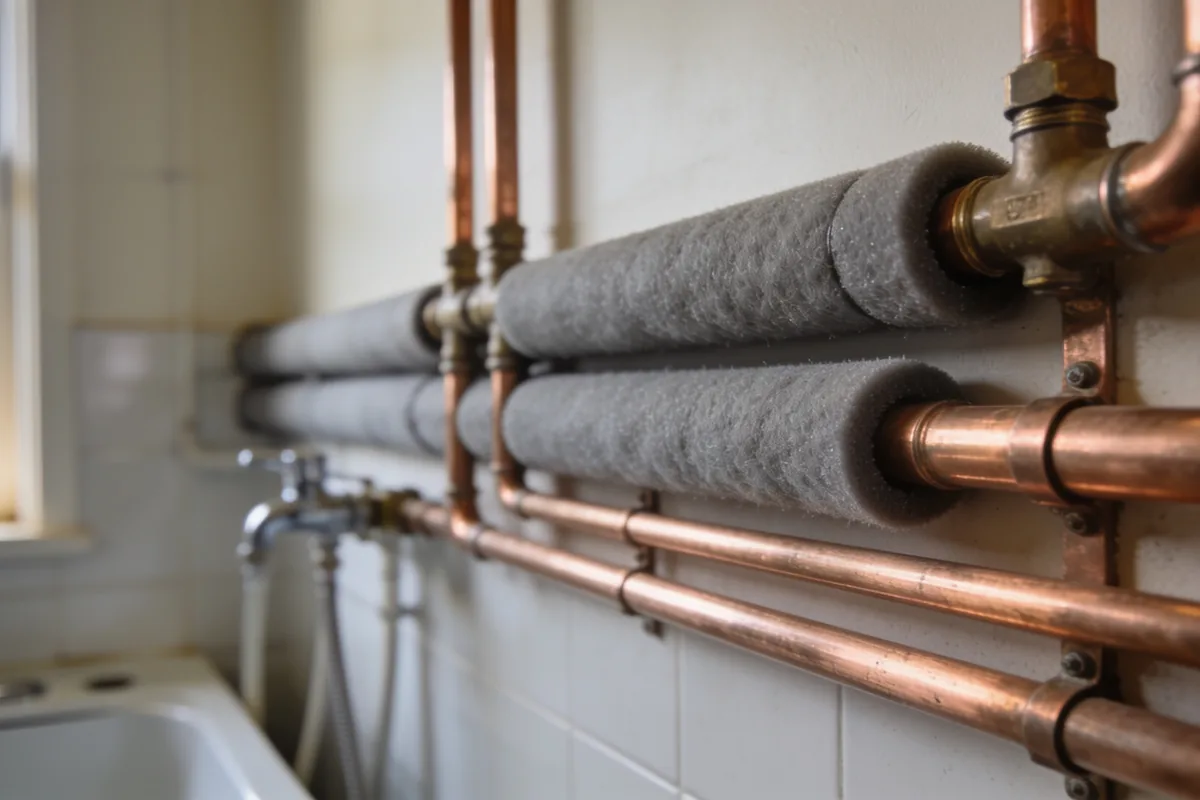
YourHome says about 30 per cent of the energy a storage system uses is wasted as heat lost from the tank and the pipework. That’s the number that makes insulation worth doing.
Two things follow. Keep hot water pipes short where you have a say, such as in a renovation. And wrap the tank in an insulation blanket, with one exception: don’t wrap a gas storage system with a pilot light, because the water can overheat. Follow all safety requirements on the product and on your unit, and ask a licensed plumber if you aren’t sure which type you have.
Fix 4: heat at the right time
Off-peak operation suits electric storage systems larger than 250 litres, according to YourHome. Smaller systems are unsuitable for it and can cost more to run. If your tank is over that size and your electricity plan has an off-peak rate, it’s a question worth putting to your retailer and your plumber. If your tank is smaller, skip this one.
The fair case for the other side
Some households will say the thermostat is the easiest change on the list and the one with the most obvious effect. For a tank set far above what’s needed, with no tempering valve at the taps, they have a point: that setup wastes energy and risks scalds. But the fix there is a licensed plumber, who can sort out both, and not a quiet drop below 60 degrees C by the householder.
The other reasonable objection is that a big upgrade beats a list of small habits. YourHome says a heat pump or a solar hot water system costs more to buy but can be cheaper to run, and that’s a real option for some households. It’s a different decision from the four fixes here, and it doesn’t make them pointless.
What would change this advice
Three things would change what’s best for your house. A tempering valve already fitted at your taps tells you scald protection is in place, so you can put your effort into the four fixes, though the 60 degree floor on the tank still stands. A very old tank is the point to ask a plumber about replacement, which is where a heat pump or solar system comes into the picture. And an off-peak electricity plan paired with a large enough electric tank makes timing worth a closer look.
Without those, the order is simple: use less, lose less, heat at the right time, and leave the thermostat where the regulator says it belongs.
Sources: Building and Plumbing Commission (Victoria), “Hot water safety” (https://www.bpc.vic.gov.au/resource-hub/safety-guides/hot-water-safety); Australian Government YourHome, “Hot water systems” (https://www.yourhome.gov.au/energy/hot-water-service)
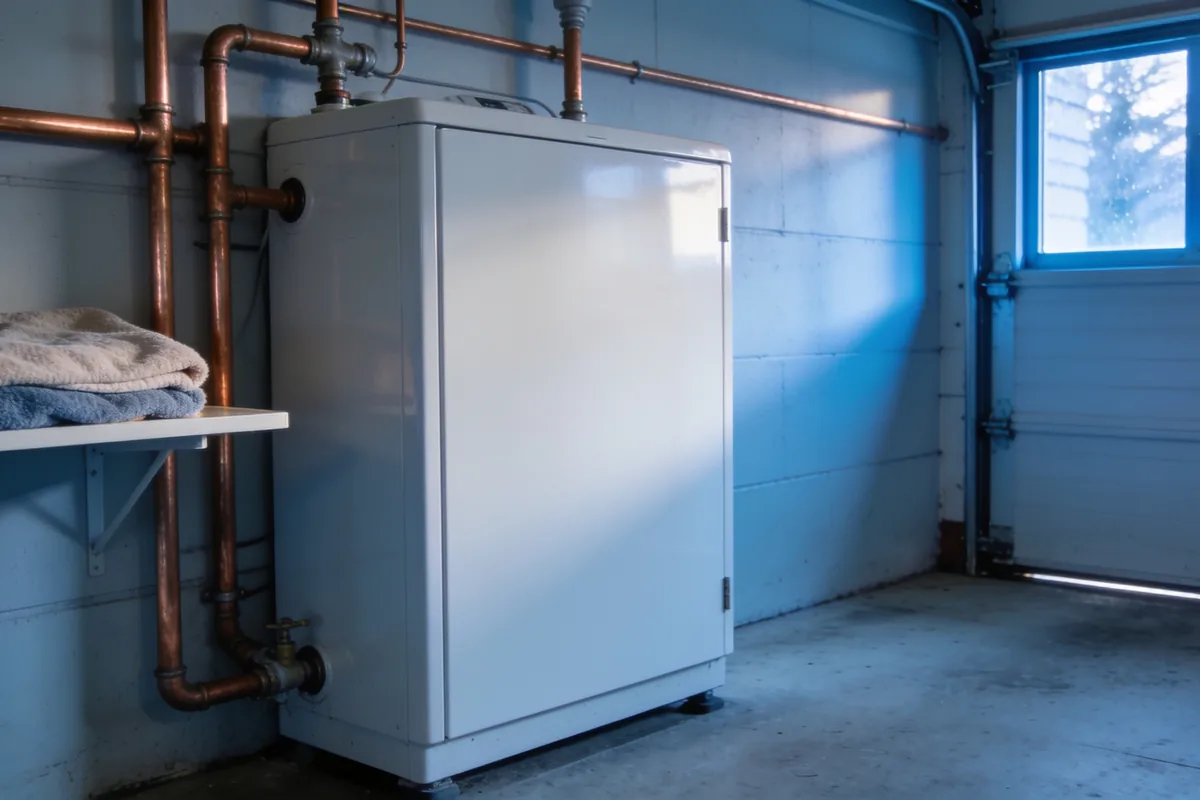
Why does the hot water run out faster in winter?
Because the water coming into the tank is colder, so the heater has more work to do before it reaches the temperature you’ve set. Households also tend to use more hot water in the cooler months. A system that copes easily in January can struggle in July even though nothing has broken.
Is that always the reason?
No. If your hot water runs out much sooner than it did last winter, or comes out lukewarm from the first minute, something else may be going on. Sediment in the tank, a thermostat fault or an element that has stopped working can all do it. On a gas system, the cause might be the burner or the pilot. Strange noises from the unit, or water around the base of the tank, are worth taking seriously too.
You can’t tell which it is from the shower. A licensed plumber is the right person to ask, and you can make the call more useful with a couple of notes first.
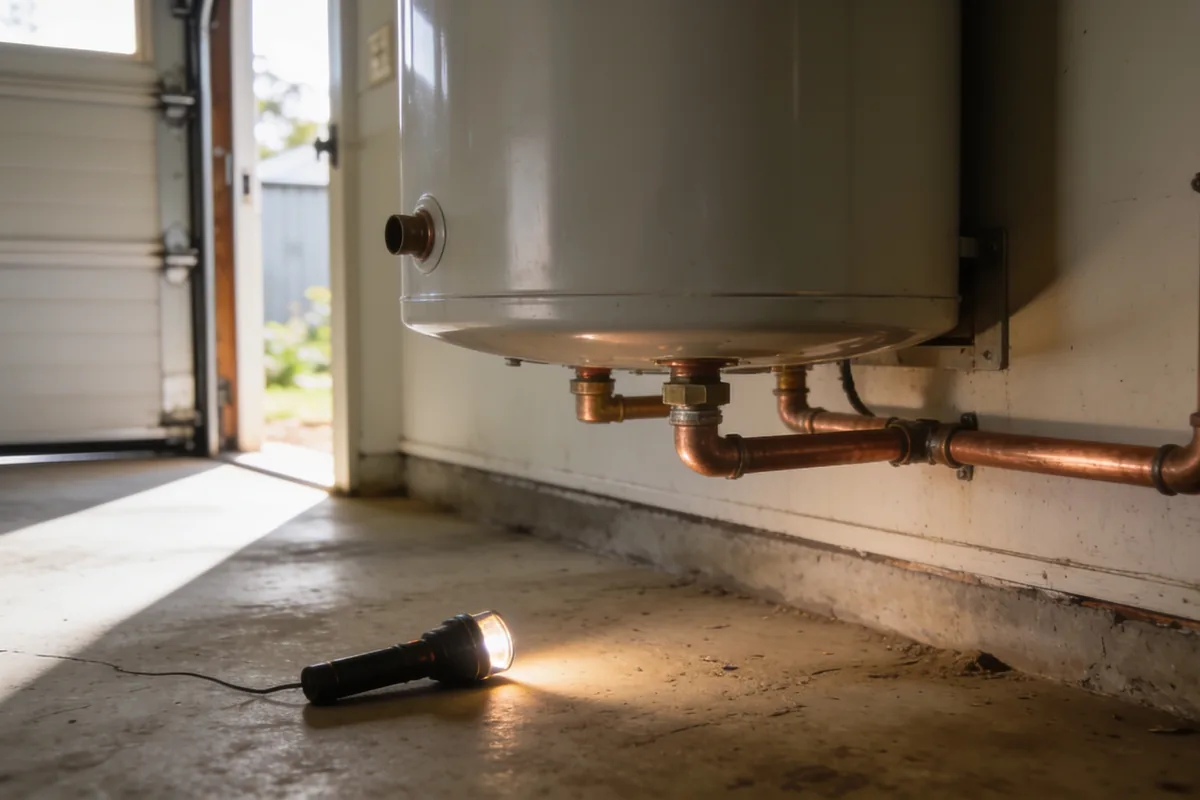
What can I check before I ring?
Three quick things:
- Look at the temperature setting, if your system shows one.
- Look at the base of the tank for any water, using a torch if the spot is dark.
- Write down when the problem started, and whether it happens with every shower or only the second one in a row.
The last note is the useful one. “Every shower” and “only the second one” point towards different causes, and a plumber can often narrow it down from your answer on the phone.
Should I turn the thermostat up?
Not without checking first. In Victoria, the Building and Plumbing Commission says hot water needs to be stored above 60 degrees C to stop bacteria such as Legionella growing. Plumbing law also limits the water at a shower or tap to 50 degrees C, using a tempering valve. So the setting on the tank isn’t a comfort dial. Turning it down or up changes more than how warm your shower feels.
Other states have their own rules, so if you’re outside Victoria, ask your plumber what applies where you live. If you want to spend less on hot water, that’s a separate question with safer answers, and it’s worth asking it before you touch the thermostat.
What if it’s only the second shower?
Then it’s probably capacity, which is just a matter of how much hot water the tank holds against how much the household uses.
The Australian Government’s YourHome guide says one person typically uses about 50 litres of hot water a day. That’s a figure for an average person, so treat it as a starting point and work out what your own household uses.
Take a hypothetical example. Say two people live in a home and use about 50 litres each, which is around 100 litres a day. If the kids come home for the winter holidays and there are now four people, the same tank has to cover about 200 litres a day on that figure. The tank hasn’t got worse. It’s covering twice the use, and the second shower in a row is where you’d notice it first.
If that sounds like your house, a longer gap between showers may be all it needs.
How old is too old?
There isn’t a single age at which a hot water system is finished, so this article doesn’t give one. YourHome notes that a glass-lined storage tank has a sacrificial anode, a part that wears away so the tank doesn’t, and that it needs replacing every few years. A plumber can check it. It’s one of the simplest things to ask about if your system is on the older side.
Before you ring
You’ve got three notes to jot down: when it started, whether it’s every shower or only the second, and what’s at the base of the tank. Add the make of the unit if you can see it, and whether it runs on gas or electricity.
Then ring a licensed plumber. A fast run-out and lukewarm water from the start are both worth a proper look, and the notes will save you a few minutes of questions.
Sources: Building and Plumbing Commission (Victoria), “Hot water safety” (https://www.bpc.vic.gov.au/resource-hub/safety-guides/hot-water-safety); Australian Government YourHome, “Hot water systems” (https://www.yourhome.gov.au/energy/hot-water-service)
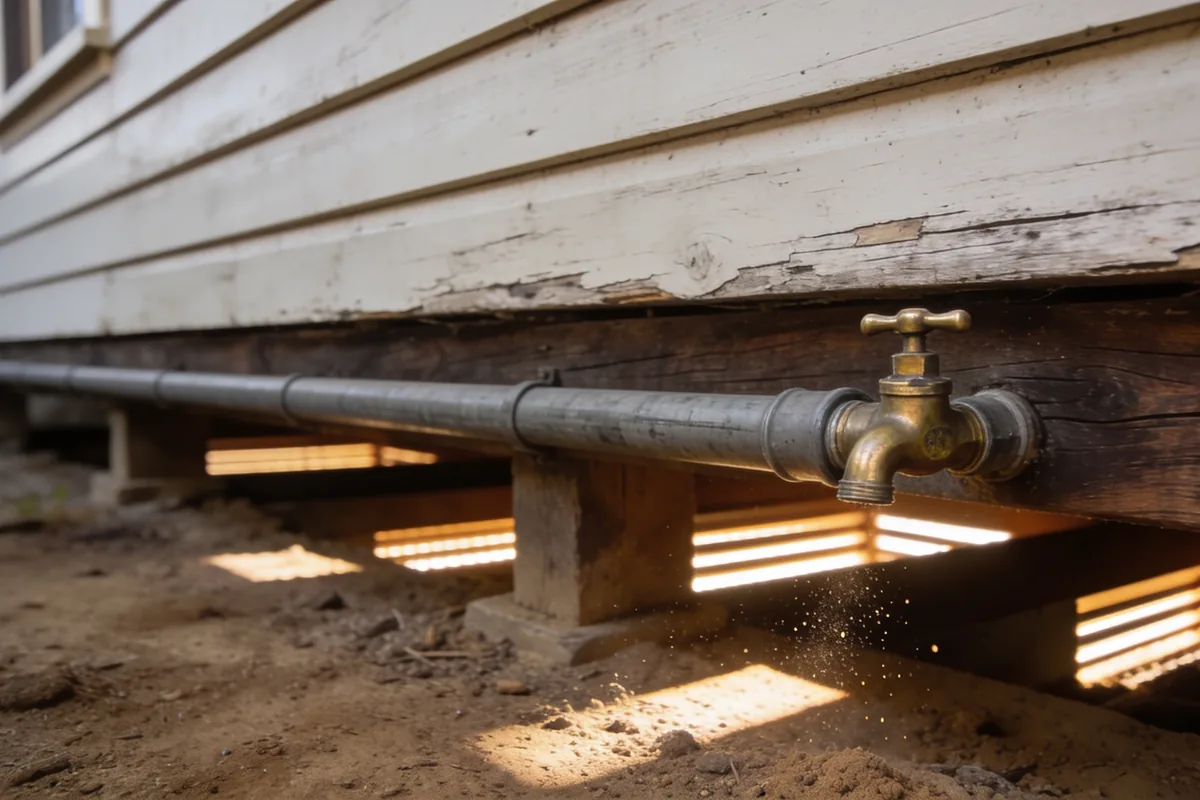
Old galvanised pipes are mostly a rust and pressure problem. The lead worry sits mainly with brass fittings and old solder, according to Australian guidance, so replace pipes when they fail and not because of fear.
Below is how to check your own house, what to do either way, and where the other side has a point.
How to tell what pipes you have
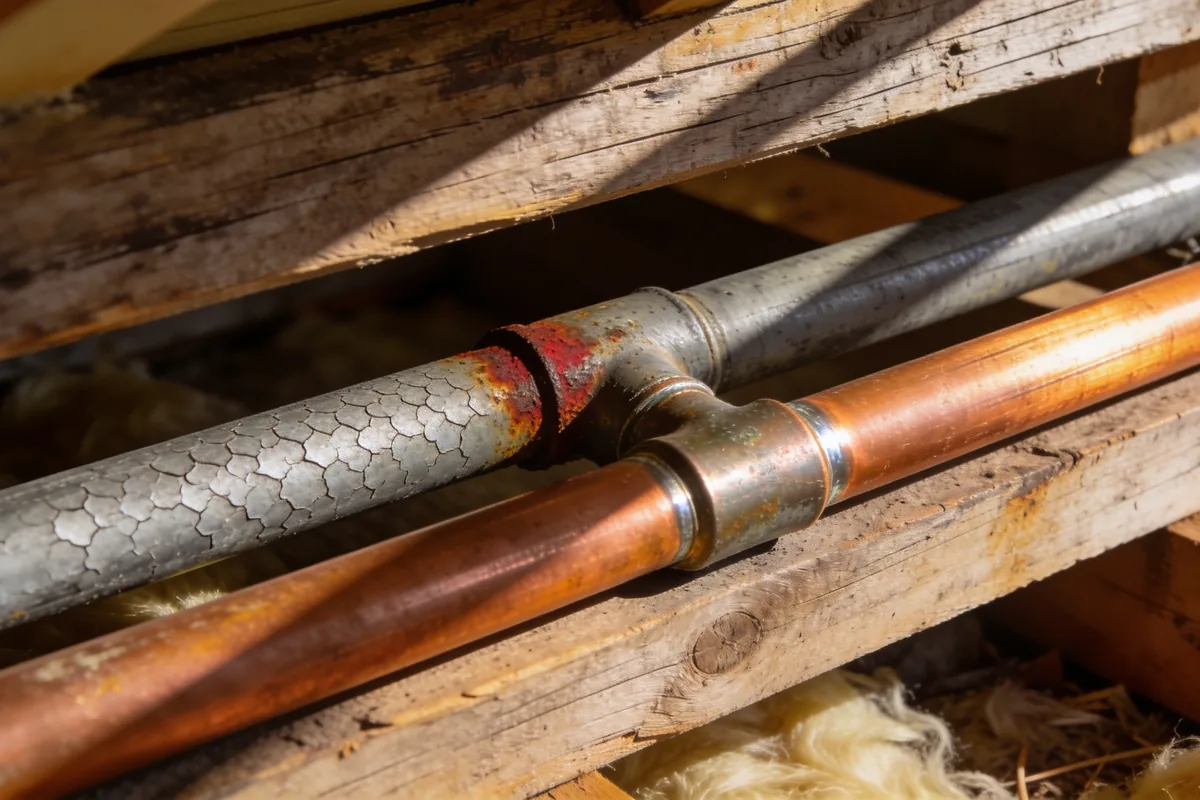
Start with what you can see. Unitywater, a Queensland water utility, says galvanised pipe is grey and usually roughly 25 mm (one inch) across. It also gives a rule of thumb: if the plumbing hasn’t been upgraded in the last 40 years, the pipes are likely galvanised. That’s a Queensland utility’s guide, not a law of nature, so treat it as a prompt to look.
Then match the surface:
- Dull grey, rough, scaly or rusty: most likely galvanised.
- Smooth and orange-brown: most likely copper.
- Black with blue lines: polyethylene.
If you can’t tell, scratch the surface carefully and look at what’s underneath.
The rust test
Galvanised pipes corrode from the inside. Unitywater suggests a simple check:
- First thing in the morning, before anyone uses any water, fill a small white container from the tap.
- Look for discoloured water or particles.
- Repeat once or twice on other mornings.
If it shows up, the inside of the pipe is probably corroded. A licensed plumber can cut out a small section and look inside.
Other signs on the utility’s list are a metallic taste, rust stains on the outside of the pipes, particles in the water, poor pressure and a blocked filter. Its health statement is short: this is generally not harmful.
So is it lead?
Mostly, no. The Australian Government’s enHealth statement on lead in drinking water from plumbing products is the best guide here, and it says a few plain things:
- Town water is regulated, and enHealth describes it as safe.
- It’s unusual to find drinking-water service pipes containing lead in Australia.
- Lead can dissolve from some brass fittings, especially after the water has sat in contact with them for a long time.
- Some older homes have copper pipes joined with lead solder, which licensed plumbers are no longer permitted to use.
- Hot water systems can dissolve more metal than cold water.
- Raised blood lead in Australia is rarely traced to drinking water.
- Infants fed formula made with the water are the higher-risk case.
- There’s generally no need to have water tested for lead.
Notice what isn’t on that list. The enHealth statement doesn’t name galvanised pipe as a source of lead. It names brass fittings and old solder. That doesn’t prove galvanised pipe is harmless in every case. It means the Australian guidance points elsewhere.
What to do either way
enHealth’s steps for householders cost nothing:
- Use the cold tap only for drinking and cooking.
- Flush the cold tap for at least 10 seconds first thing in the morning.
- After more than 48 hours away, flush it for at least 2 minutes.
Unitywater adds that running affected taps for 1 to 2 minutes at the start of the day clears discoloured water. It also says that doesn’t fix the cause.
The other side
Overseas, the position is different. Health Canada’s drinking water guideline document on cadmium says galvanized steel pipes can be a source of both cadmium and lead, especially for systems without corrosion control. That’s a fair point, and it explains why the lead worry travels so easily.
It is Canadian guidance about Canadian systems, though. Australian guidance hasn’t said the same about galvanised pipe. If you have an infant at home or the question still bothers you, ask your water supplier. That’s a reasonable call to make, and it doesn’t commit you to a repipe.
When to repipe
Here’s what Unitywater says: the only way to completely overcome the corrosion problems is to replace the pipe, with polyethylene or copper, by a licensed plumber. It also says the discolouration and taste aren’t a health issue and don’t need to be fixed immediately.
So the trigger is how the house behaves: discoloured water that keeps coming back, pressure that has dropped, or leaks. Those are reasons. Age on its own, or a scary headline, isn’t one.
If you do go ahead, get the job quoted in writing. Ask the plumber to show you the inside of a cut section of your pipe first, so you can see the problem for yourself before you pay to fix it.
Repipe for the right reason
Test the water in a white container. Flush the cold tap. Then decide on pressure and leaks, not on lead.
Sources: Australian Government enHealth, “Lead in drinking water from some plumbing products” (https://www.cdc.gov.au/system/files/2025-10/enhealth-guidance-lead-in-drinking-water-from-some-plumbing-products_0.docx); Unitywater, “Checking galvanised water pipes” (https://unitywater.com/residential/manage-your-water-usage/stop-problems-occurring/galvanised-water-pipes); Health Canada, “Guidelines for Canadian Drinking Water Quality: Guideline Technical Document, Cadmium” (https://www.canada.ca/en/health-canada/services/publications/healthy-living/guidelines-canadian-drinking-water-quality-guideline-technical-document-cadmium.html)

Silverfish in the House: They Follow Damp, So Start With the Humidity

How to Tell if a Mango Is Ripe: Feel and Aroma First, Colour Last

NDIS Worker Orientation Module: What to Do While the Online Course Is Offline
NDIS Worker Orientation Module: What to Do While the Online Course Is Offline

Gutter Overflowing in the Rain? Where to Look First

Engine Coolant Myths: What Water, the Gauge and the Calendar Get Wrong
-
 Healthcare5 days ago
NDIS Worker Orientation Module: What to Do While the Online Course Is Offline
-
 Home & Garden12 months ago
Gutter Overflowing in the Rain? Where to Look First
-
 Automotive12 months ago
Engine Coolant Myths: What Water, the Gauge and the Calendar Get Wrong
-
 Healthcare9 months ago
Stiff Joints in the Morning: What Is Normal and When to See a GP
-
 Home & Garden11 months ago
Galvanised Pipes at Home: Is It Lead You Should Worry About, or Rust?
-
 Healthcare1 week ago
Exercise Prescription: How the FITT Principle Builds a Personal Plan
-
 Home & Garden11 months ago
Cut Your Hot Water Bill: Four Fixes and One to Skip
-

 Family & Parenting12 months ago
Respite Options for Carers of Children with Special Needs