
Home & Garden
Cut Your Hot Water Bill: Four Fixes and One to Skip

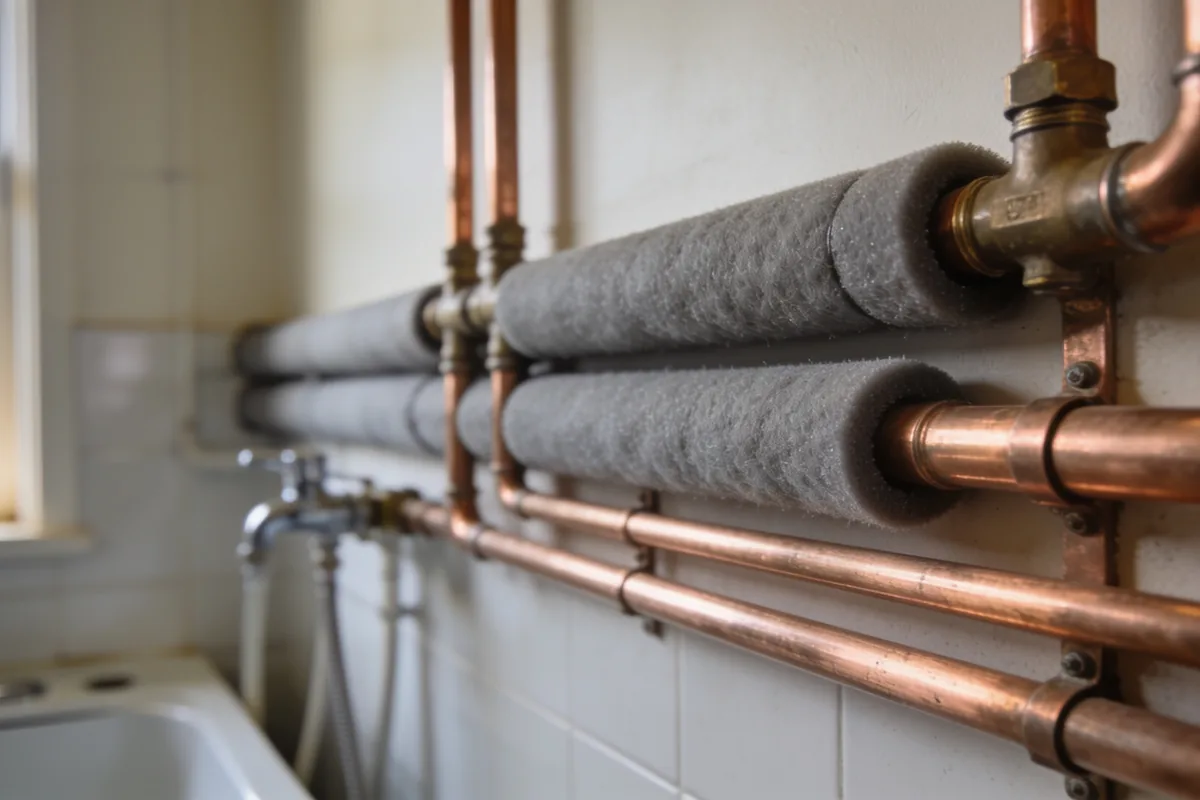
Leave the tank thermostat alone. Lowering a storage tank’s temperature below 60 degrees C is the one popular saving that isn’t safe, and it’s a common tip online.
The real savings are in using less hot water, losing less heat on the way to the tap, and heating at the right time. Four fixes do that. One tip doesn’t, and it’s the one to skip.
The test for any hot water saving
Ask one question of every tip: does it make you use less hot water, lose less heat, or pay less per unit of energy? If it does none of those, it isn’t a saving. It’s a change that looks like one.
Skip: lowering the tank temperature
A storage tank has to hold its water above 60 degrees C to stop Legionella bacteria growing, according to the Building and Plumbing Commission in Victoria. The same guide says a tempering valve keeps the water at the tap at or below 50 degrees C, which limits scalding without turning the tank down.
So the thermostat is a safety setting, not a budget dial. Systems installed before 5 August 1998 are unlikely to have a tempering valve. If you don’t know whether yours does, a licensed plumber can tell you and fit one. Rules differ by state, so this is the Victorian position, and it’s worth checking where you live.
Fix 1: use less hot water
The first lever is volume. Water-efficient showerheads and taps cut the volume that goes through the heater, and the heater has less to do. The Australian Government’s YourHome guide covers both.
Fix 2: stop the small draws
Mixer taps left in the hot position are a quiet drain. YourHome notes that small drawings of hot water often never reach the tap, so the heater has warmed water that only fills the pipe and goes cold again. For a splash of water to rinse a cup or wash your hands, put the mixer in the cold position.
Fix dripping hot taps too. A drip is hot water you’ve paid to heat and nobody has used.
Fix 3: lose less heat
YourHome says about 30 per cent of the energy a storage system uses is wasted as heat lost from the tank and the pipework. That’s the number that makes insulation worth doing.
Two things follow. Keep hot water pipes short where you have a say, such as in a renovation. And wrap the tank in an insulation blanket, with one exception: don’t wrap a gas storage system with a pilot light, because the water can overheat. Follow all safety requirements on the product and on your unit, and ask a licensed plumber if you aren’t sure which type you have.
Fix 4: heat at the right time
Off-peak operation suits electric storage systems larger than 250 litres, according to YourHome. Smaller systems are unsuitable for it and can cost more to run. If your tank is over that size and your electricity plan has an off-peak rate, it’s a question worth putting to your retailer and your plumber. If your tank is smaller, skip this one.
The fair case for the other side
Some households will say the thermostat is the easiest change on the list and the one with the most obvious effect. For a tank set far above what’s needed, with no tempering valve at the taps, they have a point: that setup wastes energy and risks scalds. But the fix there is a licensed plumber, who can sort out both, and not a quiet drop below 60 degrees C by the householder.
The other reasonable objection is that a big upgrade beats a list of small habits. YourHome says a heat pump or a solar hot water system costs more to buy but can be cheaper to run, and that’s a real option for some households. It’s a different decision from the four fixes here, and it doesn’t make them pointless.
What would change this advice
Three things would change what’s best for your house. A tempering valve already fitted at your taps tells you scald protection is in place, so you can put your effort into the four fixes, though the 60 degree floor on the tank still stands. A very old tank is the point to ask a plumber about replacement, which is where a heat pump or solar system comes into the picture. And an off-peak electricity plan paired with a large enough electric tank makes timing worth a closer look.
Without those, the order is simple: use less, lose less, heat at the right time, and leave the thermostat where the regulator says it belongs.
Sources: Building and Plumbing Commission (Victoria), “Hot water safety” (https://www.bpc.vic.gov.au/resource-hub/safety-guides/hot-water-safety); Australian Government YourHome, “Hot water systems” (https://www.yourhome.gov.au/energy/hot-water-service)

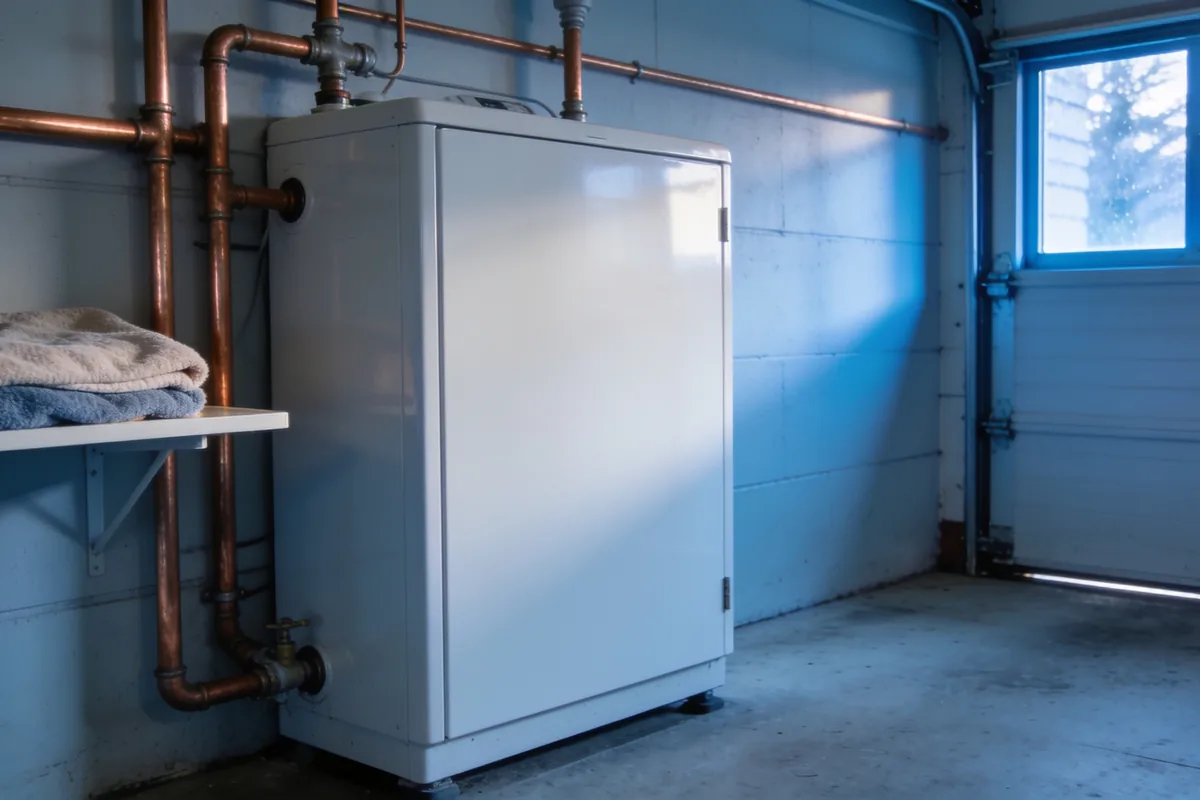
Why does the hot water run out faster in winter?
Because the water coming into the tank is colder, so the heater has more work to do before it reaches the temperature you’ve set. Households also tend to use more hot water in the cooler months. A system that copes easily in January can struggle in July even though nothing has broken.
Is that always the reason?
No. If your hot water runs out much sooner than it did last winter, or comes out lukewarm from the first minute, something else may be going on. Sediment in the tank, a thermostat fault or an element that has stopped working can all do it. On a gas system, the cause might be the burner or the pilot. Strange noises from the unit, or water around the base of the tank, are worth taking seriously too.
You can’t tell which it is from the shower. A licensed plumber is the right person to ask, and you can make the call more useful with a couple of notes first.
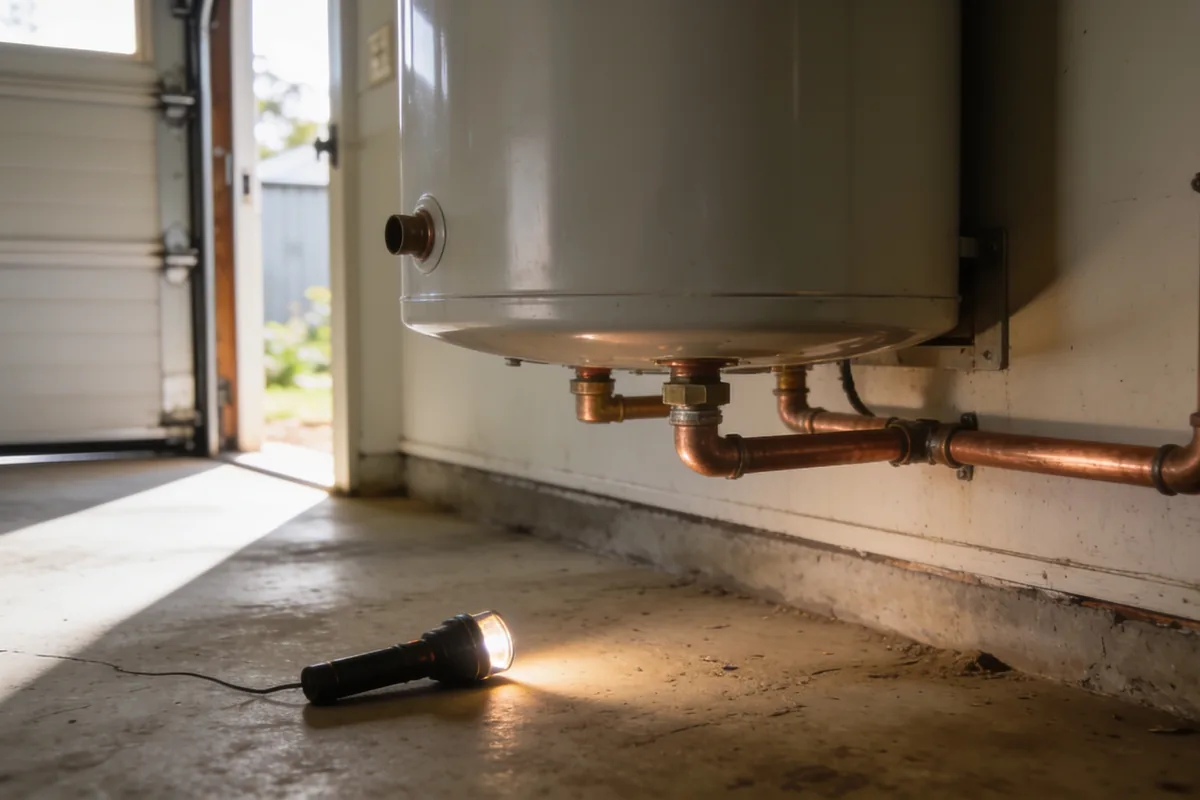
What can I check before I ring?
Three quick things:
- Look at the temperature setting, if your system shows one.
- Look at the base of the tank for any water, using a torch if the spot is dark.
- Write down when the problem started, and whether it happens with every shower or only the second one in a row.
The last note is the useful one. “Every shower” and “only the second one” point towards different causes, and a plumber can often narrow it down from your answer on the phone.
Should I turn the thermostat up?
Not without checking first. In Victoria, the Building and Plumbing Commission says hot water needs to be stored above 60 degrees C to stop bacteria such as Legionella growing. Plumbing law also limits the water at a shower or tap to 50 degrees C, using a tempering valve. So the setting on the tank isn’t a comfort dial. Turning it down or up changes more than how warm your shower feels.
Other states have their own rules, so if you’re outside Victoria, ask your plumber what applies where you live. If you want to spend less on hot water, that’s a separate question with safer answers, and it’s worth asking it before you touch the thermostat.
What if it’s only the second shower?
Then it’s probably capacity, which is just a matter of how much hot water the tank holds against how much the household uses.
The Australian Government’s YourHome guide says one person typically uses about 50 litres of hot water a day. That’s a figure for an average person, so treat it as a starting point and work out what your own household uses.
Take a hypothetical example. Say two people live in a home and use about 50 litres each, which is around 100 litres a day. If the kids come home for the winter holidays and there are now four people, the same tank has to cover about 200 litres a day on that figure. The tank hasn’t got worse. It’s covering twice the use, and the second shower in a row is where you’d notice it first.
If that sounds like your house, a longer gap between showers may be all it needs.
How old is too old?
There isn’t a single age at which a hot water system is finished, so this article doesn’t give one. YourHome notes that a glass-lined storage tank has a sacrificial anode, a part that wears away so the tank doesn’t, and that it needs replacing every few years. A plumber can check it. It’s one of the simplest things to ask about if your system is on the older side.
Before you ring
You’ve got three notes to jot down: when it started, whether it’s every shower or only the second, and what’s at the base of the tank. Add the make of the unit if you can see it, and whether it runs on gas or electricity.
Then ring a licensed plumber. A fast run-out and lukewarm water from the start are both worth a proper look, and the notes will save you a few minutes of questions.
Sources: Building and Plumbing Commission (Victoria), “Hot water safety” (https://www.bpc.vic.gov.au/resource-hub/safety-guides/hot-water-safety); Australian Government YourHome, “Hot water systems” (https://www.yourhome.gov.au/energy/hot-water-service)
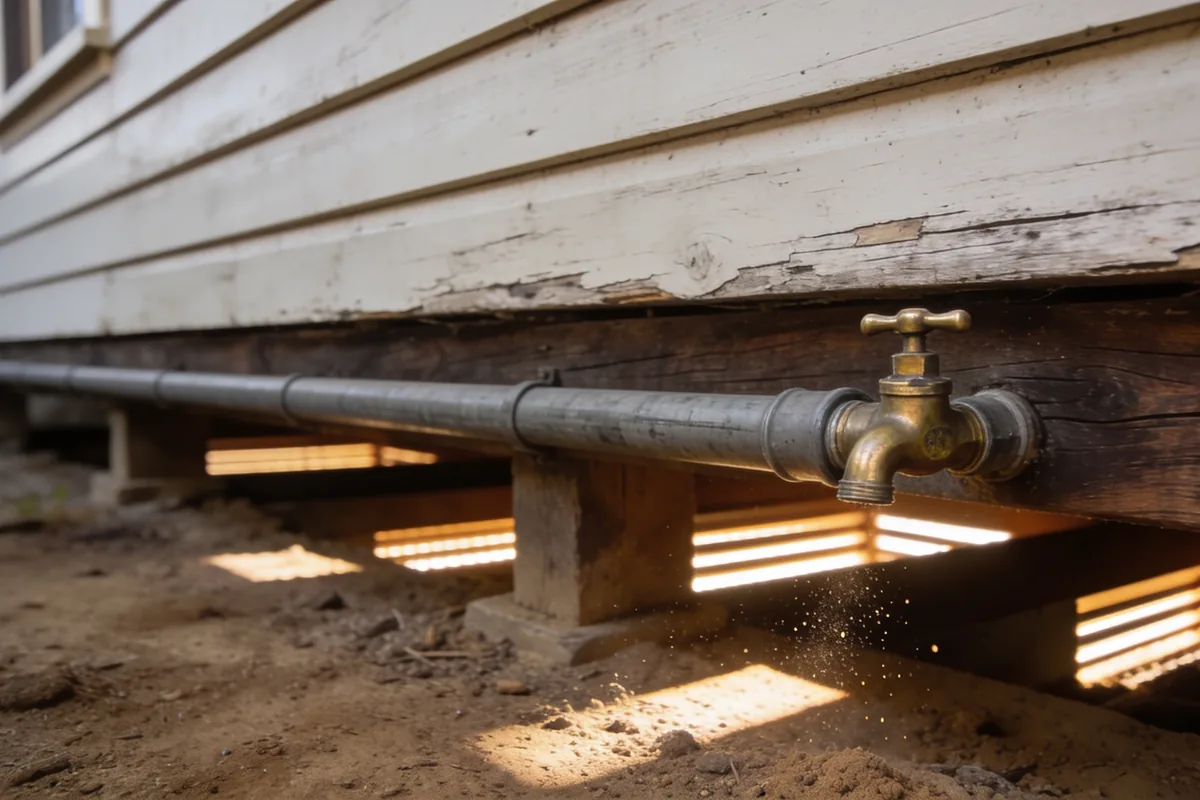
Old galvanised pipes are mostly a rust and pressure problem. The lead worry sits mainly with brass fittings and old solder, according to Australian guidance, so replace pipes when they fail and not because of fear.
Below is how to check your own house, what to do either way, and where the other side has a point.
How to tell what pipes you have
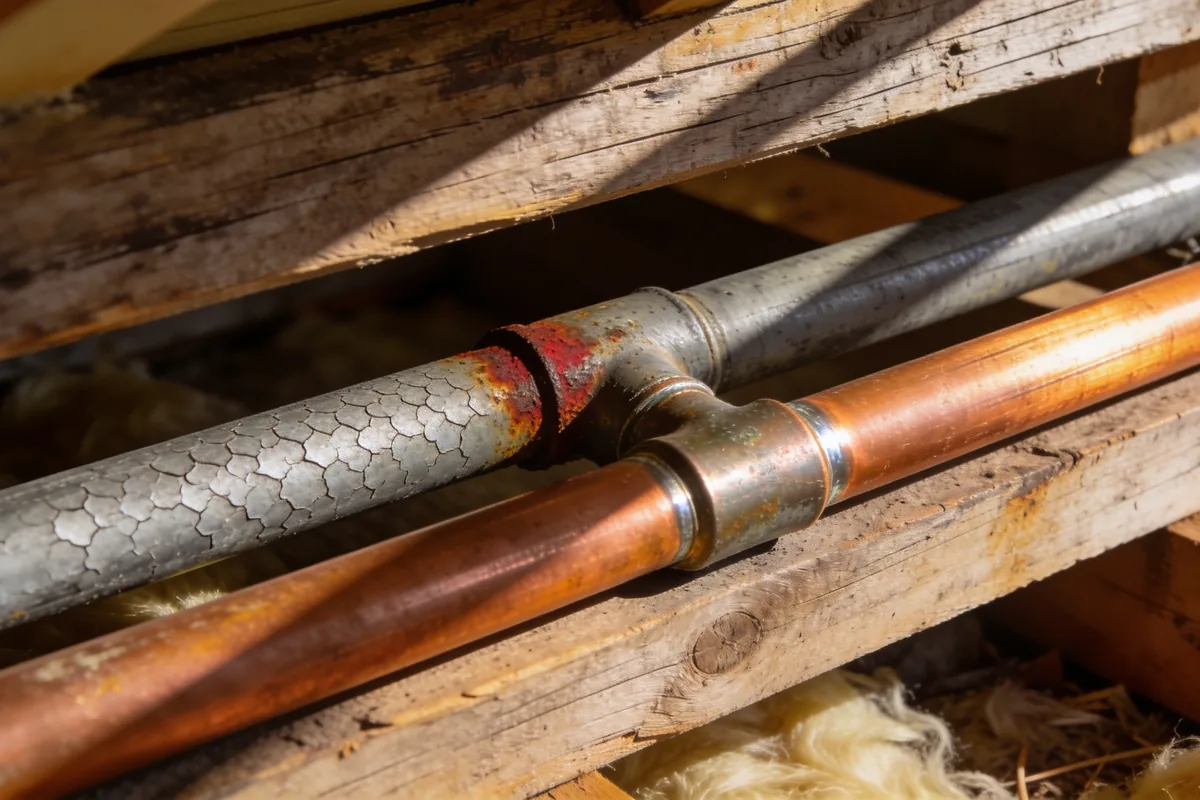
Start with what you can see. Unitywater, a Queensland water utility, says galvanised pipe is grey and usually roughly 25 mm (one inch) across. It also gives a rule of thumb: if the plumbing hasn’t been upgraded in the last 40 years, the pipes are likely galvanised. That’s a Queensland utility’s guide, not a law of nature, so treat it as a prompt to look.
Then match the surface:
- Dull grey, rough, scaly or rusty: most likely galvanised.
- Smooth and orange-brown: most likely copper.
- Black with blue lines: polyethylene.
If you can’t tell, scratch the surface carefully and look at what’s underneath.
The rust test
Galvanised pipes corrode from the inside. Unitywater suggests a simple check:
- First thing in the morning, before anyone uses any water, fill a small white container from the tap.
- Look for discoloured water or particles.
- Repeat once or twice on other mornings.
If it shows up, the inside of the pipe is probably corroded. A licensed plumber can cut out a small section and look inside.
Other signs on the utility’s list are a metallic taste, rust stains on the outside of the pipes, particles in the water, poor pressure and a blocked filter. Its health statement is short: this is generally not harmful.
So is it lead?
Mostly, no. The Australian Government’s enHealth statement on lead in drinking water from plumbing products is the best guide here, and it says a few plain things:
- Town water is regulated, and enHealth describes it as safe.
- It’s unusual to find drinking-water service pipes containing lead in Australia.
- Lead can dissolve from some brass fittings, especially after the water has sat in contact with them for a long time.
- Some older homes have copper pipes joined with lead solder, which licensed plumbers are no longer permitted to use.
- Hot water systems can dissolve more metal than cold water.
- Raised blood lead in Australia is rarely traced to drinking water.
- Infants fed formula made with the water are the higher-risk case.
- There’s generally no need to have water tested for lead.
Notice what isn’t on that list. The enHealth statement doesn’t name galvanised pipe as a source of lead. It names brass fittings and old solder. That doesn’t prove galvanised pipe is harmless in every case. It means the Australian guidance points elsewhere.
What to do either way
enHealth’s steps for householders cost nothing:
- Use the cold tap only for drinking and cooking.
- Flush the cold tap for at least 10 seconds first thing in the morning.
- After more than 48 hours away, flush it for at least 2 minutes.
Unitywater adds that running affected taps for 1 to 2 minutes at the start of the day clears discoloured water. It also says that doesn’t fix the cause.
The other side
Overseas, the position is different. Health Canada’s drinking water guideline document on cadmium says galvanized steel pipes can be a source of both cadmium and lead, especially for systems without corrosion control. That’s a fair point, and it explains why the lead worry travels so easily.
It is Canadian guidance about Canadian systems, though. Australian guidance hasn’t said the same about galvanised pipe. If you have an infant at home or the question still bothers you, ask your water supplier. That’s a reasonable call to make, and it doesn’t commit you to a repipe.
When to repipe
Here’s what Unitywater says: the only way to completely overcome the corrosion problems is to replace the pipe, with polyethylene or copper, by a licensed plumber. It also says the discolouration and taste aren’t a health issue and don’t need to be fixed immediately.
So the trigger is how the house behaves: discoloured water that keeps coming back, pressure that has dropped, or leaks. Those are reasons. Age on its own, or a scary headline, isn’t one.
If you do go ahead, get the job quoted in writing. Ask the plumber to show you the inside of a cut section of your pipe first, so you can see the problem for yourself before you pay to fix it.
Repipe for the right reason
Test the water in a white container. Flush the cold tap. Then decide on pressure and leaks, not on lead.
Sources: Australian Government enHealth, “Lead in drinking water from some plumbing products” (https://www.cdc.gov.au/system/files/2025-10/enhealth-guidance-lead-in-drinking-water-from-some-plumbing-products_0.docx); Unitywater, “Checking galvanised water pipes” (https://unitywater.com/residential/manage-your-water-usage/stop-problems-occurring/galvanised-water-pipes); Health Canada, “Guidelines for Canadian Drinking Water Quality: Guideline Technical Document, Cadmium” (https://www.canada.ca/en/health-canada/services/publications/healthy-living/guidelines-canadian-drinking-water-quality-guideline-technical-document-cadmium.html)

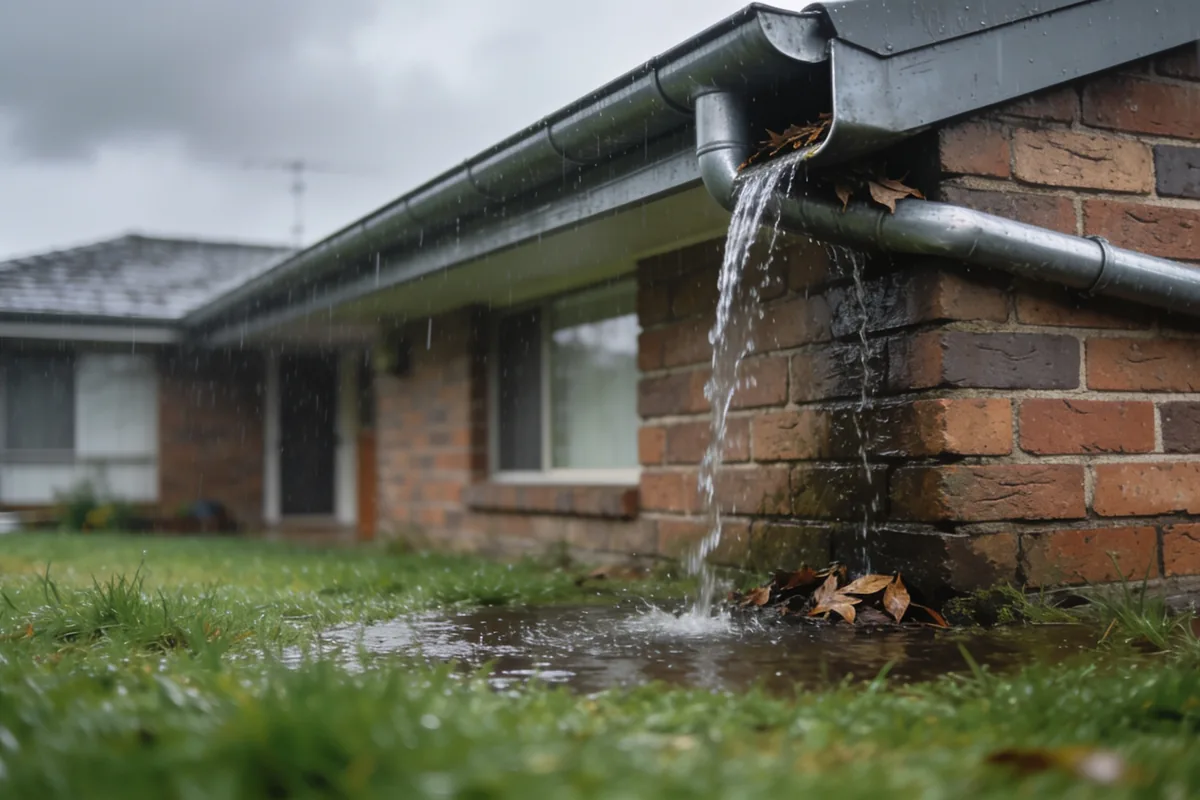
A gutter overflowing in heavy rain is one of the most ordinary household worries, and it’s usually a smaller job than it looks from the ground. Nothing has failed. The water has simply found the quickest way out of a channel that’s carrying more than it can pass, and there’s normally a plain reason for that.
You might find it helps to take one step and leave the rest for later. The step is to watch.
Watch where the water leaves
On the next proper shower, stand under the veranda or at a window with a cup of tea and look at the gutter. Notice where the water comes over. If it leaves at one spot, often near a corner, a join or the top of a downpipe, something is probably holding it back right there. If it spills along the whole length, the gutter may be carrying more than it can pass, or the water may not be draining away at the far end.
Then look at where the water goes next. Does it fall clear of the wall and land on the ground, or does it run back toward the eaves and the board behind the gutter? Water that falls clear is mostly a nuisance for your path and garden. Water that tracks back toward the house is worth a closer look, and it’s worth mentioning to anyone you call. Water that sits pooled against a wall is also better sorted sooner than later.
It’s okay if you can’t tell straight away. A second shower will usually show you what the first one didn’t.
The usual cause: leaves and a slow downpipe
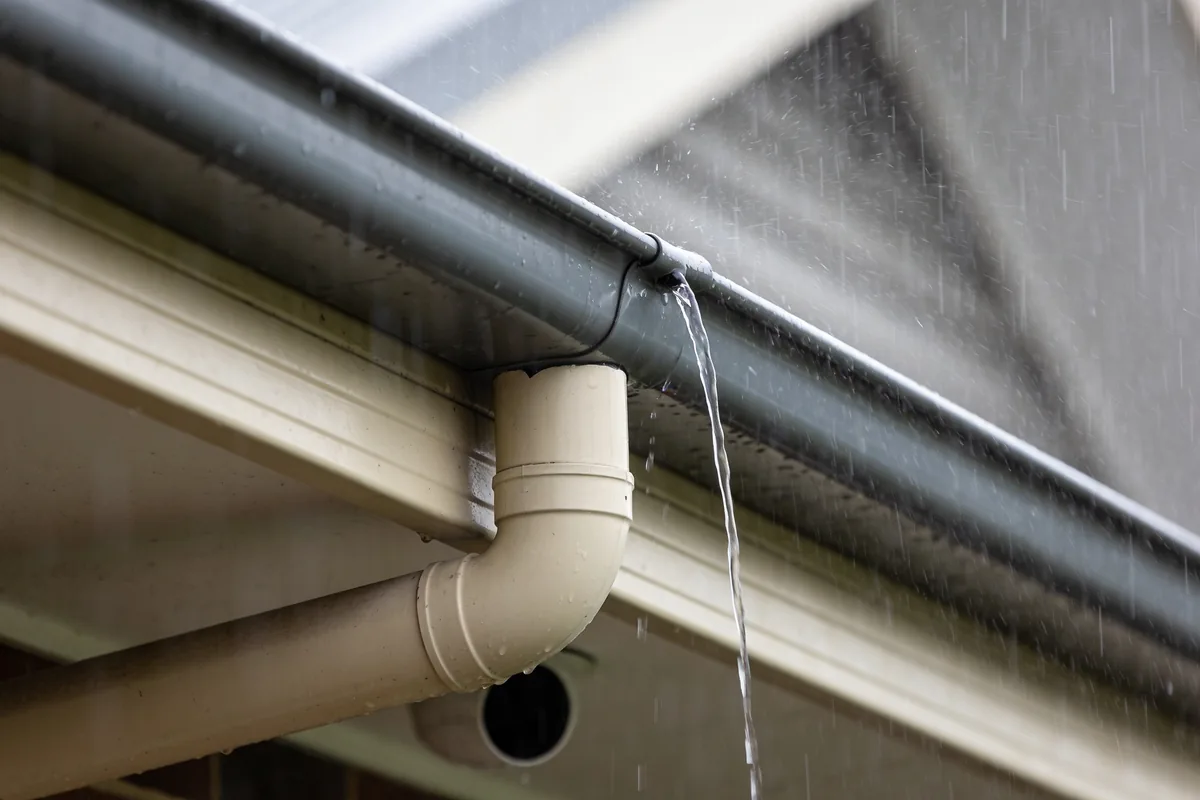
Most overflows come from something small. A handful of leaves and twigs at an outlet is enough to hold back a surprising amount of water, and a downpipe that has clogged near the bottom does the same job from the other end.
A hose is a gentle way to check. Run it into the gutter just above the downpipe and see whether the water clears. If it drains freely, the trouble is probably somewhere else along the run. If it backs up, you’ve found your first suspect.
You can often do this from the ground at a low section. If you’d rather use a ladder, it’s best only when you’re comfortable on one and it sits firmly on level ground. If you’d prefer not to go up at all, that’s a perfectly good reason to ask someone else, and there’s no need to feel awkward about it.
Clearing it before fire season too
Overflow isn’t the only reason to keep a gutter tidy. The Country Fire Authority lists clearing gutters and removing leaves and twigs among the basic jobs for preparing a property for the fire season. So one clear-out helps the rain leave the gutter and covers a job the fire authority lists as well.
There’s no need for a rigid timetable. Doing it regularly, and before the fire season starts, is a sensible habit, and you could pair it with a look after a windy week or a big fall of leaves.
When a gutter keeps overflowing after you’ve cleared it
If the water still comes over after the leaves are gone and the downpipe runs freely, the cause may be in the gutter itself. That isn’t your doing. Gutters that overflow again and again after cleaning are often undersized or poorly graded, and clearing leaves can’t fix that.
From the ground, you might notice:
- a section that sags or dips
- rust or gaps at the joins
- a long run with only one downpipe
- water that sits in the channel instead of moving toward the outlet
Each of these is a fault in the system, not in your housekeeping, and this is where a plumber can help. In Victoria, fabricating, installing, replacing and testing roof drainage is licensed roofing stormwater work, according to the state’s building regulator. Other states differ, so if you live elsewhere it’s worth checking with your state’s plumbing regulator before you book anyone, and it’s fair to ask whoever you call about their licence.
What to say when you ring
Three small notes make the call shorter and the answer more useful:
- Where the water overflows: one spot or the whole length.
- When it started, and whether it’s only in heavy rain.
- Whether it clears when you run a hose down the downpipe.
If you noticed the water running back toward the eaves instead of falling clear, say so. It’s one more clue, and it helps the person on the other end picture the problem.
One decision for this weekend
Will you look yourself, or call someone? Either answer is a good one. If you’re looking, pick a dry hour, keep your feet on firm ground and start at the downpipe. If you’re calling, jot down the three notes first.
The rest can wait for the next dry day.
Sources: Country Fire Authority, “Time to prepare your property for fire season” (https://news.cfa.vic.gov.au/news/time-to-prepare-your-property-for-fire-season); Victorian Building Authority, “Roofing stormwater work” (https://www.vba.vic.gov.au/registration-and-licensing/plumbing-registration-and-licensing/roofing-stormwater)

NDIS Worker Orientation Module: What to Do While the Online Course Is Offline

Exercise Prescription: How the FITT Principle Builds a Personal Plan

The Spam Act: An Unsubscribe Link Cannot Fix a Message Sent Without Consent
NDIS Worker Orientation Module: What to Do While the Online Course Is Offline

Gutter Overflowing in the Rain? Where to Look First

Engine Coolant Myths: What Water, the Gauge and the Calendar Get Wrong
-
 Healthcare2 days ago
NDIS Worker Orientation Module: What to Do While the Online Course Is Offline
-
 Home & Garden12 months ago
Gutter Overflowing in the Rain? Where to Look First
-
 Automotive12 months ago
Engine Coolant Myths: What Water, the Gauge and the Calendar Get Wrong
-

 Healthcare9 months ago
Stiff Joints in the Morning: What Is Normal and When to See a GP
-
 Home & Garden11 months ago
Galvanised Pipes at Home: Is It Lead You Should Worry About, or Rust?
-
 Healthcare3 days ago
Exercise Prescription: How the FITT Principle Builds a Personal Plan
-

 Family & Parenting12 months ago
Respite Options for Carers of Children with Special Needs
-
 Home & Garden10 months ago
Why Does the Hot Water Run Out Faster in Winter?