
Travel
A NSW National Parks Pass Pays Off by the Ninth Day at $8, and Tasmania’s by the Third

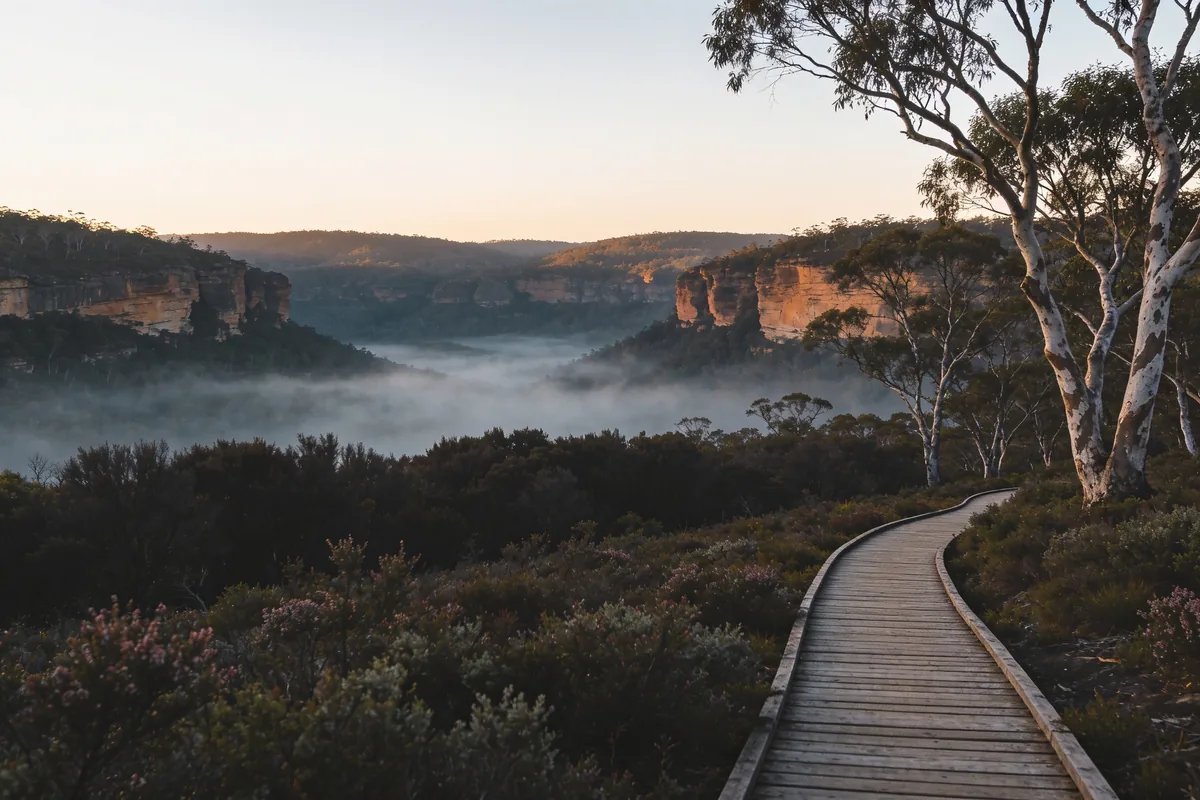
The gravel is still warm underfoot when the car stops at the edge of the park, and the boot comes up with a thump. A cooler, two daypacks, a folded map nobody will open. Ahead of the bonnet a pay machine stands under a small tin roof, its screen pale in the glare, and a sign beside it says the fee is charged per vehicle. On the phone in the cup holder, the search bar still reads national parks pass NSW. Someone at the open boot is counting on their fingers: this weekend, the long weekend in January, the school holidays, perhaps a couple of days in autumn. The machine waits. A magpie crosses the gravel as if it pays the rent here.
(A composite scene, not a real visit.)
The question behind all that finger-counting is a plain one: is the pass cheaper than the gate? It is, once the number of vehicle-days at fee-charging parks passes a line, and the line is the pass price divided by the day fee. In NSW at the standard $8 a day, the Multi Park Pass, which covers every fee-charging park except Kosciuszko, pays for itself on the ninth day. In Tasmania, the all-parks annual pass does it on the third. Below the count, pay by the day. Above it, buy the pass. The sums follow, state by state, along with what a pass does not cover. Every fee here was checked on 19 November 2026.
What a pass actually replaces
A pass replaces one thing, the vehicle entry fee. The fee is charged per vehicle, not per person, so a car with five people pays what a car with one pays. The NSW page says the fee relates to motor vehicles, not to people, and anyone who walks or rides a bicycle into the park gets in free. It is worth keeping that in mind throughout, because it changes every sum below.
NSW charges vehicle entry at 45 of its more than 890 national parks and reserves. Its own list shows three of those 45, Kanangra-Boyd, Thirlmere Lakes and Victoria Park Nature Reserve, as under review with no fees collected, so 42 collect today. Both numbers appear on the NSW pages. The headline says 45, and the list says who is charging as at 19 November.
Passes cover entry and nothing else. The NSW page leaves out camping and accommodation, tours and events, museums, Skitube and certain island and mooring fees. The Western Australian and South Australian pages keep camping separate too. And there is no national pass. The NSW page says its passes do not cover parks in the ACT or other states, and the Tasmanian, Western Australian and South Australian passes are each sold by that state’s own agency. A road trip across a border means a second sum.
NSW: the sum, pass by pass
The NSW page sells four annual passes. Dividing each by the standard $8 day fee gives the count, and every NSW count here means a vehicle-day at one park at the standard fee, since an NSW day pass covers only the park where it is bought, before camping, concessions and discounts.
| Pass | Price (1 year) | Covers | Day fee it replaces | Pays off from |
|---|---|---|---|---|
| Single Park Pass | $22 | Not valid in the Sydney-area parks or Kosciuszko | $8 | 3rd day (two days cost $16) |
| Country Parks Pass | $45 | Not valid in the Sydney-area parks or Kosciuszko | $8 | 6th day (five days cost $40) |
| Multi Park Pass | $65 | Every fee-collecting park except Kosciuszko | $8, or $12 at Royal, Ku-ring-gai Chase and Budderoo’s Minnamurra area | 9th day at $8 (eight days cost $64); 6th day at $12 |
| All Parks Pass | $190 | Every fee-collecting park, Kosciuszko included | $8, or $29 or $17 at Kosciuszko | See the Kosciuszko sum below |
The Single and Country passes do not cover the Sydney-area parks or Kosciuszko, which suits a visitor who keeps returning to one place or one region. The Multi Park Pass covers every fee-collecting park except Kosciuszko, so it is the pass that covers the most parks short of Kosciuszko, and it is where the headline count sits. Eight days cost $64, one dollar under the pass, and the ninth day tips it.
The annual pass is sometimes said to pay for itself. For NSW that holds, with a number attached. It is nine vehicle-days for the Multi Park Pass, six for the Country pass and three for the Single.
The $8 day fee is the standard rate, not the only one. Royal National Park and Ku-ring-gai Chase charge $12 a day, as does the Minnamurra Rainforest area of Budderoo. At $12 the Multi Park Pass pays off from the sixth day, because five days cost $60 and six cost $72. A few parks run lower or hourly rates, such as Fitzroy Falls in Morton at $4 and Broken Head at $4 an hour, and a day at one of those moves the count the other way.
The All Parks Pass, at $190, is $125 more than the Multi Park Pass. That gap is paid back by five Kosciuszko days in the snow-season window, from the June long weekend to the October long weekend, when the fee is $29 for 24 hours: five days cost $145 and four cost $116. Outside the window the fee is $17, and it takes eight days ($136, against $119 for seven). So the All Parks Pass wins only if Kosciuszko is a real plan, not a maybe.
Passes are digital and linked to the vehicle, a system the NSW page dates from 20 April 2021, so a pass belongs to one car rather than to a person. Seniors pricing differs: for one year the page lists $152 for All Parks, $50 for Multi, $35 for Country and $17 for Single. The standard day fee is the baseline throughout, so a Seniors count needs its own check. The NSW pages carry no effective date, so treat every figure here as a snapshot of 19 November 2026.
Tasmania: three days is the whole sum
Tasmania’s fee table is the tidiest of the four. A daily pass costs $49.15 per vehicle, which covers up to eight people for up to 24 hours. Two days cost $98.30, which is five cents under the holiday pass at $98.35, so the holiday pass wins from the third day. The all-parks annual pass at $104.75 does the same on the third day, when three days at the gate would cost $147.45. The annual One Park pass at $53.50 is the quickest to pay back, on the second day, but it excludes Cradle Mountain.
| Pass | Fee | Against $49.15 a day |
|---|---|---|
| Daily pass, per vehicle (up to 8 people, up to 24 hours) | $49.15 | The baseline |
| Holiday pass, per vehicle (up to 2 months) | $98.35 | Wins from the 3rd day |
| Annual pass, all parks | $104.75 | Wins from the 3rd day |
| Annual One Park pass (excludes Cradle Mountain) | $53.50 | Wins from the 2nd day |
| Two Year pass, all parks | $133.80 | Wins on the 3rd day, over its two years |
| Cradle Mountain only, daily | Adult $30.70, child (5 to 17) $12.30, family $73.75 | Its own fee, outside the sum above |
Children under five are free, and a valid pass is required for entry to all of Tasmania’s national parks. People arriving on foot, by bus or by bike pay per person instead: $24.55 for a day, or $49.20 for the holiday pass. The annual and two-year passes include up to two vehicles registered at the holder’s address, which helps a household with two cars.
Cradle Mountain is the exception to watch. It has its own daily pass, and the shuttle there is not included in the holiday, annual or two-year passes, so a pass does not cover the whole trip. The page also lists concession prices (the annual all-parks pass is $83.85 for a concession holder), so a concession count needs its own division. Tasmania says park entry fees are reviewed annually by CPI, and the page was last modified on 1 July 2026, so the count can move.
Western Australia: divide by $17
Western Australia’s day fee does the work here. A standard vehicle with 12 or fewer occupants pays $17 a day, a concession vehicle $10 and a motorcycle $10, and a large vehicle pays $8 per person. The Department of Biodiversity, Conservation and Attractions (DBCA) page was updated on 20 August 2026.
Holiday passes come in 5-day, 14-day and 4-week versions, and there is an annual all-parks pass, a concession annual pass and an annual local park pass.
Pass prices appear at checkout and were not on a page this post could confirm, so no pass price is printed here. The method is enough: take the price on the checkout screen, divide by $17 and round up. That whole number is the day the pass breaks even or better.
There is a safety net, too. The DBCA entry page says a day entry receipt can be taken to a Parks and Wildlife Service office within seven days and its value is deducted from the cost of a holiday or annual pass, so a gate fee is not lost if a trip turns out to need a pass.
Two details change the sum. An annual holder can name a second vehicle, but only one can enter at a time. RAC WA members get a discount on holiday and annual passes, though the page does not state the amount. Camping is separate, and the DBCA entry page says campers pay the entry fee once, for the first day, however many nights they stay, so the division by $17 suits day visits and not a camping stay. Monkey Mia Conservation Park needs its own fee. The passes page carries a January 2025 date, so confirm the price at checkout.
South Australia: the park’s own five-visit rule
Belair National Park’s page does some of the arithmetic itself. It says the 12-month vehicle pass is more economical if you visit more than five times a year, and that is the park’s own count, not a general rule for the state. Parks SA also sells a multi-park pass, for two months or 12, covering ten named parks: Belair, Coffin Bay, Deep Creek, Dhilba Guuranda-Innes, Ikara-Flinders Ranges, Gawler Ranges, Lincoln, Mount Remarkable, Ngarkat and Para Wirra. It excludes Kangaroo Island, the Desert Parks and any park that does not charge vehicle entry, and none of the passes include camping. The Parks SA multi-park page adds its own count, saying the 2-month pass pays off after two to three visits.
The prices could not be read from any page this post opened. The Belair page also shows two different vehicle fees with no effective date, so this post prints neither. Ask at the gate or on the booking page, then run the same division: pass price over the day fee, rounded up, and compare the answer with five.
Victoria, and the states this post leaves out
Parks Victoria’s FAQ for summer 2025 says there is no entrance fee to Wilsons Promontory National Park, but camping and accommodation fees apply. That is one park, on an undated page, and it is not a statement about the whole state. This post prices four states: NSW, Tasmania, Western Australia and South Australia. For any other state or territory, the parks agency’s own fee page is the place to look, because older posts and deal threads carry older prices, and a pass sum built on a stale number is worse than no sum.
When the pass is not worth it
A pass is a loss when the visits fall short of the count. Take a hypothetical household that reaches four $8 park days in NSW in a year. The Multi Park Pass costs $65 against $32 at the gate, so that household has paid $33 for convenience.
Trips built around camping are another case. The pass does not touch camping fees, so it only saves the entry fee, and that may be a small slice of the bill. One holiday of two park days in NSW costs $16 at the gate, less than the cheapest pass at $22. Three days cost $24, and then only the Single Park Pass edges ahead, and only outside the Sydney-area parks.
The other side has a fair point. An annual pass is sometimes likened to a gym membership, bought with good intentions and barely used, and for the household below the count the comparison is fair. Passes also buy convenience, with no machine to find and no change to hunt for, and some buyers count the fee as a contribution to the parks. Those are fair reasons to buy below the line. They sit outside the arithmetic, and it helps to know which one you are paying for.
The number is the same whether the day is a hot one or a wet one.
Before You Buy the Pass
Count the vehicle-days you will really spend at fee-charging parks this year.
Divide the pass price by the day fee, and round up.
Check the date on the fee page before you pay.
Sources: NSW National Parks, Annual passes (https://www.nationalparks.nsw.gov.au/passes-and-fees/annual-passes); NSW National Parks, Fee-collecting national parks (https://www.nationalparks.nsw.gov.au/passes-and-fees/fee-collecting-parks); NSW National Parks, Day passes (https://www.nationalparks.nsw.gov.au/passes-and-fees/day-passes); Tasmania Parks and Wildlife Service, Park passes and entry fees (https://parks.tas.gov.au/explore-our-parks/know-before-you-go/park-passes-and-entry-fees); Western Australia DBCA, Park entry fees (https://exploreparks.dbca.wa.gov.au/park-entry-fees); Western Australia DBCA, Park passes (https://exploreparks.dbca.wa.gov.au/park-passes); Parks SA, Multiple Entry Parks Pass (https://www.parks.sa.gov.au/parks-passes); Parks SA, Belair National Park (https://www.parks.sa.gov.au/parks/belair-national-park); Parks Victoria, Wilsons Promontory summer FAQ (https://www.parks.vic.gov.au/places-to-see/parks/wilsons-promontory-national-park/summer-2025)



The first light comes in low and flat across a gravel verge in the Mid West, and the dew has not yet lifted off anything. Two cars are pulled in at the edge, doors open, engines ticking as they cool. Nobody is saying much.
Past the fence line a carpet of pink and white everlastings runs out to the low scrub, every head turned the same way, each holding a bead of water that catches the pale sky. A sandy track cuts through it, two old wheel ruts with a ribbon of paler dirt between. Somewhere in the scrub a bird tries the same two notes three times and gives up. The air smells of damp sand and something faintly sweet, and the only other sound is a car door being pushed shut, carefully, as if the flowers could be woken.
These are the first weeks of the WA wildflower season, and the woman nearest the track has driven a long way to be here. She read three different sets of dates on the way up, and they did not agree. Further north, she has been told, the flowers have been out for a month. Here they are only just opening. Her friend asks whether they are early or late, and neither of them can say. They stand a while longer without touching anything, which is the best thing either of them does all morning.
(An invented scene.)
The season is a wave, not a date
The WA wildflower season is a wave and not a date, and the sensible way to plan for it is by region, with about two weeks spare. That last figure is this article’s own recommendation. It comes from the width of the windows the tourism bodies publish, which differ from one another by weeks at the edges, and none of them prints it.
Tourism Western Australia describes the season as one that “typically has a six-month window”, starting in the Pilbara in June and moving across the Goldfields and along the Coral Coast. By September, it says, Perth’s urban parks and the hills of the Swan Valley are “bursting with colour”, and in the Margaret River region the season comes to a vivid close in October. Read in that order, the six months are not six months of flowers everywhere. They are one slow movement from the north to the south, with each place having its own few weeks inside it.
Tourism WA puts the state’s wildflowers at more than 12,000 species and says 60 per cent of its flowering species are found nowhere else. It says Kings Park alone is home to more than 3,000 wildflower species. A traveller does not need to see all of them, and nobody could, but the numbers suggest why no single date can describe the whole state. The display is spread over a very large number of species and a very long journey from the Pilbara to the south.
Australia’s Coral Coast describes the same movement from the other side of the map. First blooms come “from early July” along the Ningaloo Coast and Exmouth, and the display then spreads south through the Mid West to Nambung and the Pinnacles in spring. Two bodies draw the same line from north to south, and that agreement is the firmest ground in the subject. It is the dates along the line that move.
What decides where the wave is in any given week is not the calendar. Australia’s Coral Coast says plainly that the timing, intensity and duration of the display are “heavily influenced by winter rainfall”. A published window describes a usual pattern, and the plants respond to the water they received, not to the date on which a visitor has booked leave.
Region by region, in each body’s own words
The table below sets out the windows as each body states them, region by region, with the body named. Nothing in it has been averaged or smoothed.
| Region | Window as stated | Who says it |
|---|---|---|
| Pilbara and north-west | Season starts in June | Tourism Western Australia |
| Ningaloo and Exmouth | First blooms from early July | Australia’s Coral Coast |
| Coral Coast overall | Best time to visit July to early October; the rare Wreath Flower can bloom at any time between July and October, depending heavily on weather | Australia’s Coral Coast |
| Eastern Wheatbelt | Mid-July to mid-September, depending on rainfall; Wheatbelt season typically July to October; Nungarin late July to early October; Kondinin and Hyden September and October | Central Wheatbelt Visitor Centre |
| Perth and surrounds | Parks and hills in colour by September; sights around Perth from mid-August to November | Tourism Western Australia; Destination Perth |
| Margaret River region | Season closes in October | Tourism Western Australia |
Even inside one region the dates are not uniform. The Wheatbelt centre gives Nungarin late July to early October, while Kondinin and Hyden are September and October, so a single region can hold towns whose windows start several weeks apart. A traveller moving through the table from top to bottom is moving, roughly, with the season, from the Pilbara in June towards the Margaret River region in October. A traveller who reads one row and applies it to the whole map is reading a window meant for somewhere else.
Each of these is a general window and not a forecast for any one year. The Wreath Flower row is the clearest example: the Coral Coast page calls it highly weather-dependent and points readers to its “Wildflower Watch” for current reports, because even a window of four months is too wide to promise one bloom.
Where the windows disagree, and why
Put side by side, the windows overlap more than they clash, and where they clash it is by weeks. Tourism WA has Perth’s parks bursting with colour “by September”, while Destination Perth puts sights around the city from mid-August. The two statements are not strictly in conflict. One gives a point by which the parks are in colour and the other a general window that opens earlier, and the gap between them is a few weeks.
The edges of the season are the same story. The Coral Coast page ends its best time to visit in early October, while Destination Perth runs to November and Tourism WA closes the Margaret River region in October. The Wheatbelt centre gives a core window of mid-July to mid-September and a wider typical season of July to October, and it says in the same breath that everything depends on rainfall. Several of the sources carry some version of that qualifier, which is what makes the disagreement more apparent than real. A body that publishes a range is telling the reader the range, and the reader who takes the middle of it as a promise has misread the page.
The article’s own call, labelled as such: treat each window as a guide. Plan by region, not by the whole state’s six months, and keep about two weeks spare around the trip, so that a late start or an early finish falls inside the plan and not on it. For a traveller from interstate, who has to book flights and leave months ahead, that spare fortnight is the cheapest insurance on offer.
Take a hypothetical traveller with leave from the middle of September, hoping to see the Eastern Wheatbelt. The Central Wheatbelt Visitor Centre gives mid-July to mid-September, which puts that traveller at the very end of the stated window, and gives Kondinin and Hyden as September and October, which puts them in the middle of another. Neither window guarantees anything, and both depend on rain. The sensible response is not to abandon the plan but to widen it: ask the visitor centre what is out, and be ready to head for the town whose window is later. That is what two weeks spare buys, a choice of towns on the day instead of a single bet made months before.
Look, do not pick
The rule travellers do not expect is the one about picking. Wildflowers on a verge look like something a visitor might gather, and the law says otherwise. The Department of Biodiversity, Conservation and Attractions (DBCA) sets this out under the Biodiversity Conservation Act 2016. Its page, updated in June 2026, defines taking flora to include “to gather, pluck, cut, pull up, destroy, dig up, remove, harvest or damage flora by any means”. The list is long, and “pluck” and “cut” are both on it.
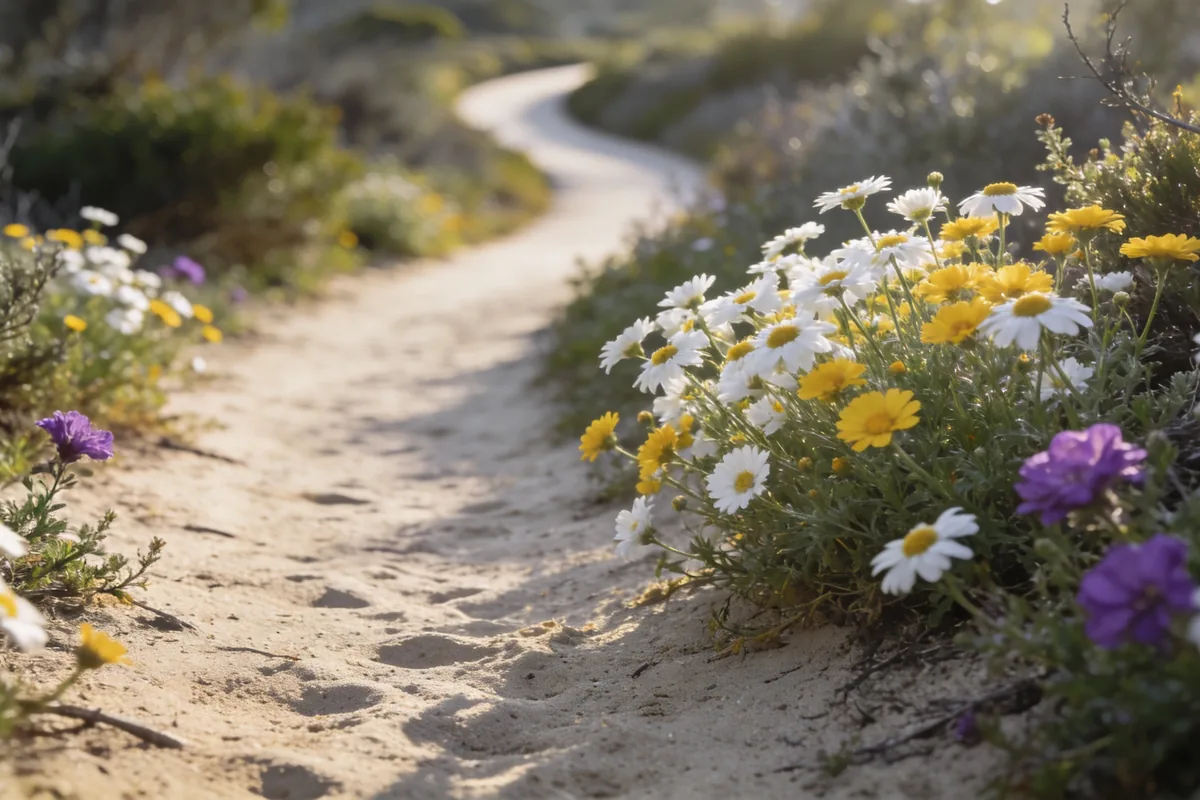
DBCA adds two more points. A flora licence is the mechanism for taking “any flora native to Western Australia from Crown land excluding threatened species”. And threatened flora is treated separately: taking it without the Minister’s authorisation is an offence. The page says nothing about private land in the passages read, so this article makes no claim about it.
Australia’s Coral Coast puts the rule in plainer terms for visitors. Its page says “The picking of wildflowers is illegal and can attract a $2,000AUD fine”, a figure that belongs to the Coral Coast’s statement and not to the Act, and it asks visitors to stick to the paths. The second instruction does as much work as the first. A narrow sandy track edged with flowers is the whole point of the trip, and it is also the way of seeing them that leaves them standing for the next visitor.
In practice that means looking, photographing, leaving everything where it grows and keeping to the track.
If your dates cannot move
There is a fair case for ignoring all of the above, and it belongs to the traveller whose leave is fixed. If the dates cannot move, the sources point to the same answer: choose the part of the state where the window is longest and latest. Tourism WA has Perth and the Swan Valley in colour by September. Destination Perth gives a general window of mid-August to November for sights around the city. Kings Park, by Tourism WA’s account, holds more than 3,000 species of wildflower within the same urban setting. On the published wording, Perth and its surrounds offer the widest margin for a trip planned a long way ahead, and the south closes the season later than the north.
Two more checks apply wherever the trip goes. The first is the one the Coral Coast gives: contact local visitor centres before heading out, and look at current reports such as its “Wildflower Watch”, because rain decides, and rain changes. The second is about roads. Australia’s Coral Coast notes that heavy rain can close unsealed roads, including the road into Coalseam, so a wet winter that brings the flowers on can also close the way to them. Neither check costs anything, and both do more for a trip than a perfect date.
The fair summary of the fixed-dates case is that it narrows the choice and does not remove it. A traveller who cannot move can still pick the region whose window is most likely to be open, take the advice to ask locally, and accept that the flowers will be what the winter rain made them. That is a smaller promise than most itineraries make, but it is the one the sources support.
Pick the Region, Keep Two Weeks Spare
Back on the verge in the Mid West, the sun is clear of the scrub now and the dew is going. The wheel ruts have lost their long shadows, and the everlastings have started to open their faces to the light, one row at a time. The woman who read three sets of dates puts her phone away and walks the length of the track once, slowly, and her friend photographs a single everlasting from a hand’s width away.
The region was always the question.
Sources: Tourism Western Australia, Find wildflowers (https://www.westernaustralia.com/en/things-to-do/nature-and-wildlife/find-wildflowers); Australia’s Coral Coast, Wildflowers (https://www.australiascoralcoast.com/see-do/wildflowers); Central Wheatbelt Visitor Centre, Current Wildflower Season (https://www.wheatbelttourism.com/wildflowers/current-wildflower-season); Destination Perth, Wildflowers (https://www.destinationperth.com.au/wildflowers); Department of Biodiversity, Conservation and Attractions, Authorisation to take and disturb threatened flora, last updated 19 June 2026 (https://dbca.wa.gov.au/node/9619)

The arrivals hall smells of coffee and floor polish, and the woman at the hire counter is already sliding a tablet across the desk. The traveller has been awake for a very long time. The screen shows a long page of small print, and her thumb is hovering over the box at the bottom. There is a paragraph about tolls somewhere in the middle, and she doesn’t read it. Nobody does, at this hour.
She signs. A man in a hi-vis vest walks her through the car park to a white hatchback, points at the fuel cap, and hands over the keys. Outside, the light is flat and grey. The traffic on the ramp is already moving fast. Above the first stretch of freeway, a steel gantry spans every lane, and she drives under it without looking up.
(An invented scene for illustration.)
The charge nobody sees
Nothing is paid at the gantry. The driver is long gone before any charge is made, and that is the whole difficulty with Melbourne tolls in a hire car.
The trip is matched afterwards to an account. If it isn’t matched to one, it becomes a toll invoice sent to the vehicle’s owner, with additional fees added, according to Linkt’s help page on tolls and fees. For a hire car, the owner is the rental company, not the driver.
Three paths a hire-car toll can take
There are three ways the charge can reach someone, and the traveller in the scene signed up for one of them without knowing it.
The first is the rental company’s own arrangement. Linkt says some rental agencies have toll arrangements that automatically charge their customers, and it advises checking with the agency how tolls are paid. That means asking how the charge is billed and whether the agency adds something on top.
The second is your own toll account. Some visitors already have one. Linkt says you can add a valid tag to your account for the trip, and that you should remove it when you return the car. It also says to avoid registering the rental vehicle itself on your own account.
The third is nothing at all. If no account and no agency arrangement covers the trip, the invoice goes to the owner, which for a hire car is the rental company. The company then bills you under your rental agreement. This is the path most likely to arrive late and larger than a traveller expects, because the additional fees travel with the invoice.
What to ask at the counter
Three questions are worth having ready before you take the keys:
- How are tolls charged on this car?
- Is there a daily or per-trip fee on top of the toll itself, and what is it?
- What happens if I use my own toll account?
This article gives no dollar amounts. Toll prices and fee tables change, so any figure printed here would age quickly. The answers you get at the counter are the figures that apply to your car.
If you want none of it
Some visitors can avoid every toll road on a short stay. Maps apps can route around tolls, though some of those routes are slower. If your stay is short and your journeys are simple, it’s a fair option. Check the route before you leave the car park, not in the middle of a merge.
Ask at the counter
Picture two travellers at the same hire counter on the same morning. (This is a second invented scene for illustration.)
One of them looks up from the screen and asks how tolls are charged. The agent answers, the traveller makes a note, and she’s on the road in four minutes.
The other signs without reading and finds out about the tolls a month later, in an email.
The only difference between them is the question.
Sources: Linkt, “Using rental vehicles on toll roads”, Melbourne (https://linkt.com.au/help/travelling-toll-roads/using-rental-vehicles-on-toll-roads/melbourne.html); Linkt, “Tolls and fees” (https://linkt.com.au/help/travelling-toll-roads/tolls-and-fees)

A NSW National Parks Pass Pays Off by the Ninth Day at $8, and Tasmania’s by the Third

Silverfish in the House: They Follow Damp, So Start With the Humidity

How to Tell if a Mango Is Ripe: Feel and Aroma First, Colour Last

NDIS Worker Orientation Module: What to Do While the Online Course Is Offline

Gutter Overflowing in the Rain? Where to Look First

Engine Coolant Myths: What Water, the Gauge and the Calendar Get Wrong
-
 Healthcare1 week ago
NDIS Worker Orientation Module: What to Do While the Online Course Is Offline
-
 Home & Garden12 months ago
Gutter Overflowing in the Rain? Where to Look First
-
 Automotive12 months ago
Engine Coolant Myths: What Water, the Gauge and the Calendar Get Wrong
-

 Healthcare9 months ago
Stiff Joints in the Morning: What Is Normal and When to See a GP
-
 Home & Garden11 months ago
Galvanised Pipes at Home: Is It Lead You Should Worry About, or Rust?
-

 Healthcare2 weeks ago
Exercise Prescription: How the FITT Principle Builds a Personal Plan
-

 Home & Garden11 months ago
Cut Your Hot Water Bill: Four Fixes and One to Skip
-

 Family & Parenting12 months ago
Respite Options for Carers of Children with Special Needs