Healthcare
Stiff Joints in the Morning: What Is Normal and When to See a GP

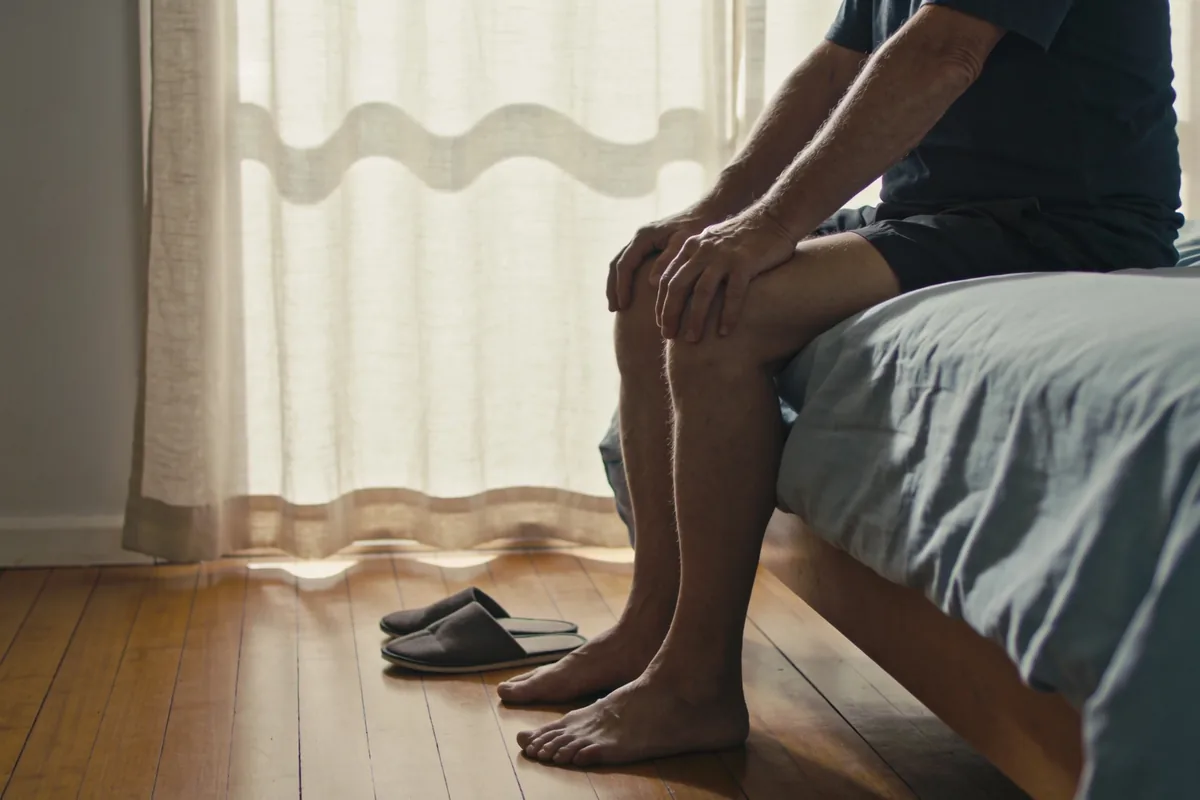
Is it normal for my joints to feel stiff in the morning?
Sometimes, yes. Joints get sore and stiff for many reasons: an injury, overuse, a new activity, a long stretch of sitting, or arthritis. Healthdirect lists stiffness among the main symptoms of osteoarthritis. Stiffness on its own doesn’t tell you which of those reasons applies.
How long is too long?
There’s no single number that separates normal from not normal. You’ll see figures like 30 minutes or an hour quoted online, but they aren’t in the Healthdirect pages this article draws on, so this article doesn’t quote one.
What the Healthdirect arthritis page gives instead is a set of triggers. See your doctor if you have pain and stiffness in your joints that:
- starts with no clear reason
- lasts more than a few days
- comes with swelling, redness and warmth
If any of those sound like you, book the appointment. You don’t need to work out the cause first, and you don’t need to wait for a certain length of stiffness to “count”.
What counts as a clear reason?
A clear reason is something you can point to: a new activity, a long day of gardening, a knock or an injury, or a stretch of sitting that was longer than usual. Healthdirect lists injury, overuse and a new activity among the reasons joints get sore and stiff.
If your stiffness fits one of those and eases within a few days, it’s on the ordinary side. If it starts with nothing you can point to, or it lingers past a few days, that’s the pattern Healthdirect says to take to a doctor.
Does moving help?
Regular movement is the general advice for staying mobile. The Department of Health’s guideline for adults aged 18 to 64 recommends functional activities that target mobility, balance and coordination on 3 or more days a week, and muscle-strengthening activities on 2 or more days a week. It also recommends breaking up long periods of sitting.
That’s a baseline for adults in general. It isn’t a treatment for any condition, and it doesn’t replace what a doctor tells you about your own joints.
What can I do this week?
Three small things:
- Break up long stretches of sitting with a short walk or a stretch, especially on desk days.
- Try some gentle stretching after you’ve been sitting for a while.
- Write down when the stiffness is worst and how long it lasts.
The last one is the most useful if you end up seeing a GP. For some conditions, such as inflammatory arthritis, how long the stiffness lasts is something a clinician will ask about, so a few days of notes means you can answer with more than a guess.
What will my GP want to know?
Expect questions along these lines, and have your answers ready:
- Which joints are stiff, and is it one side or both?
- When is it worst, and when does it ease?
- How long does it last each time?
- Is there any swelling, redness or warmth?
- Did anything start it, such as an injury or a new activity?
You don’t need medical words for any of it. “My right knee is stiff when I get up and it loosens after I’ve been moving” is a perfectly useful answer. Your notes from the week do most of the work.
Who can help besides my GP?
Your GP is the first stop. After that, an Accredited Exercise Physiologist is a health professional who prescribes tailored exercise programs for people with chronic conditions, according to Exercise and Sports Science Australia. Your GP can tell you whether that’s a good fit for you. No provider is recommended here, and no particular result is promised, because that depends on your own health and your own joints.
When shouldn’t I wait?
Don’t wait if you have:
- swelling, redness and warmth in a joint
- stiffness for more than a few days with no clear reason
- severe pain after an injury
For advice, Healthdirect’s nurse line is 1800 022 222. For an emergency, call triple zero.
When to ask
Two things make a GP appointment more useful: when the stiffness happens, and how long it lasts. Write both down for a few days before you go. If you notice swelling, redness and warmth, or the stiffness hangs around for more than a few days without a reason, ring the surgery.
Sources: Healthdirect Australia, “Arthritis” (https://www.healthdirect.gov.au/arthritis); Healthdirect Australia, “Osteoarthritis” (https://www.healthdirect.gov.au/osteoarthritis); Australian Government Department of Health, Disability and Ageing, “Recommendations for adults (18 to 64 years)” (https://www.health.gov.au/topics/physical-activity-and-exercise/physical-activity-and-exercise-guidelines-for-all-australians/for-adults-18-to-64-years); Exercise and Sports Science Australia, “ESSA urges Australians to speak to the right exercise professional in 2019” (https://www.essa.org.au/Public/News_Room/Media_Releases1/2019/ESSA_urges_Australians_to_speak_to_the_right_exercise_professional_in_2019.aspx)





This article is general information only. It does not take account of any particular worker’s or provider’s circumstances. It sets out the position stated on the NDIS Quality and Safeguards Commission’s worker training portal page, last updated 10 November 2026. That position may change, and the Commission’s page should be checked for the current statement before any step is taken.
1. Scope and status
The Commission’s online NDIS worker orientation module is temporarily unavailable. This article records what the Commission says about the module, about the interim version it has published, and about the evidence of completion that a worker may be asked to produce. It does not cover worker screening, which is a separate matter.
2. Who the module is for
The Commission states that the module helps all new and existing NDIS workers. Its NDIS Code of Conduct page adds that the module is useful for all workers, and mandatory for staff of registered NDIS providers. This article does not extend either statement to particular roles or to volunteers. A worker unsure whether the module applies to them should ask their employer or the Commission.
3. What the module covers
The Commission describes a course with an estimated completion time of 60 minutes. It is made up of four modules, completed in order, on the following topics:
- what the NDIS is and why it exists;
- the role of human rights;
- worker responsibilities under the Code of Conduct; and
- the role of the Commission.
According to the interim document, each module closes with a short summary of the worker’s role and some reflective questions.
4. What is offline, and what the Commission says to do
The online version of the worker orientation module is offline for a period in late 2026. The Commission makes the following statements, set out here in the order in which it gives them:
- Workers can complete the worker orientation module through a request-access form, at their own pace. A certificate is shown on screen on completion and is also emailed.
- An interim version of the module has been published for use while the online module is offline.
- A worker who completes the interim version will not need to complete the online version when it becomes available.
- Once the online version is available, the interim version is no longer to be used.
This article adds no step to that list. The form, the interim document and the portal page are all on the Commission’s website, and the Commission is the authority on how each is used.
5. Past certificates
The Commission states that it will provide updates on access to certificates from the module as completed in the past. The page says no more than that. A worker who holds an earlier certificate should look to the Commission for those updates. Statements published by other organisations, including statements about how long a certificate remains valid or whether it moves between employers, are not on the Commission pages relied upon here and are not repeated.
6. What an employer may ask for
The interim document states that providers may request evidence of completion as part of worker induction and compliance processes. It also states that workers should keep evidence of completion, in accordance with their organisation’s onboarding and record-keeping requirements. The organisation’s own requirements therefore govern what is asked for and in what form. A worker should confirm those requirements with the organisation rather than assume them.
7. Where the guidance differs from older pages
Some earlier pages describe a longer course and a different list of topics. The Commission’s page last updated 10 November 2026 describes a course of 60 minutes and the four topics listed in clause 3. Where an older page and the Commission’s current page differ, the Commission’s current page is the one relied upon here, since the Commission is the body that issues the module.
What to keep on file
A worker completing the module, in either version, may find it useful to keep three items together:
- the date on which the module was completed;
- the version completed, whether the interim version or the online version; and
- the Commission’s confirmation, or whichever evidence the organisation asks for.
These items follow from the Commission’s statement that evidence of completion should be kept in line with the organisation’s requirements. They are not a substitute for those requirements. The Commission’s worker training portal page should be checked for the current position before any step is taken, and this article should be read as accurate only to the date shown above.
Sources: NDIS Quality and Safeguards Commission, “NDIS Commission worker training portal” (https://www.ndiscommission.gov.au/workforce/online-training-modules/ndis-commission-worker-training-portal); NDIS Quality and Safeguards Commission, “Worker orientation module: interim version” (https://www.ndiscommission.gov.au/sites/default/files/2026-11/Worker-orientation-module-Nov2026-PDF.pdf); NDIS Quality and Safeguards Commission, “NDIS Code of Conduct” (https://www.ndiscommission.gov.au/rules-and-standards/ndis-code-conduct)
This article is general information only. It does not take account of any individual’s health, medical history or circumstances, and it is not a substitute for advice from a general practitioner or an Accredited Exercise Physiologist. It sets out, in numbered clauses, what an exercise prescription is, what the national movement guideline for adults states, and how the four factors of the FITT principle relate to both.
1. What an exercise prescription is
An exercise prescription is a structured plan stating what exercise a person should do, how often, how hard and for how long, adjusted over time as the person’s capacity changes. Exercise and Sports Science Australia (ESSA) describes Accredited Exercise Physiologists as allied health professionals who specialise in prescribing tailored exercise programs for people with chronic conditions (media release, 2019).
The FITT principle describes the four settings of such a plan: frequency, intensity, time and type. The framework names what is set. It does not, by itself, state what the settings should be for any one person.
2. The national baseline
The Australian Government Department of Health, Disability and Ageing publishes 24-hour movement guidelines for adults aged 18 to 64. As stated on that page (accessed November 2026), the recommendations include:
- moderate to vigorous physical activity for 30 minutes or more on most days;
- muscle-strengthening activities on 2 or more days a week;
- functional activities that target mobility, balance and coordination on 3 or more days a week; and
- breaking up long periods of sitting.
The guideline is a baseline for adults in general. It is not a prescription, and it does not claim to be one. For a healthy adult it may serve as a reasonable starting point without further advice. Where a person has a health condition, an injury or takes medicine that bears on exercise, the guideline is a reference against which a professional assessment is made, not a substitute for it.
3. The FITT principle laid against the guideline
The table below is the writer’s own mapping of the guideline onto the four FITT factors. It is an analysis prepared for this article and is not a published table of the Department of Health. The third column restates the guideline as quoted above, and the fourth names, in qualified terms, what an individual assessment may change.
| Factor | What it sets | How the guideline expresses it | What an individual assessment may change |
|---|---|---|---|
| Frequency | How often activity is done | Most days for moderate to vigorous activity; 2 or more days a week for muscle-strengthening; 3 or more days a week for functional activities | A condition, an injury or a medicine may change how often activity is appropriate |
| Intensity | How hard the activity is | Moderate to vigorous | A condition, an injury or a medicine may change the level at which activity is appropriate |
| Time | How long each session lasts | 30 minutes or more of moderate to vigorous activity | A condition, an injury or a medicine may change the length of session that is appropriate |
| Type | What kind of activity is done | Moderate to vigorous physical activity, muscle-strengthening and functional activities | A condition, an injury or a medicine may change which types are appropriate |

Two points follow from the table. The first is that the guideline gives figures for frequency and time but states intensity only in general terms (“moderate to vigorous”), so the intensity setting leaves the most room for interpretation for the person concerned. The second is that the last column carries the same qualification in every row, because any of the four factors may be altered by an individual’s circumstances and the guideline cannot say in advance which.
4. What an assessment looks at
An assessment by an appropriately qualified professional would ordinarily consider the person’s medical history, their current capacity and their goals. These inform the four settings and are reviewed as the person’s capacity changes. This article makes no claim about the results that any program produces, because the sources relied upon do not provide one.
5. Where to go
A person considering a program, particularly one with a health condition, may raise the matter with their general practitioner. An Accredited Exercise Physiologist is the professional ESSA identifies as prescribing tailored programs for chronic conditions. No provider is named or recommended here, and the choice of one remains a matter for the individual and their treating practitioner.
What applies, and to whom
The national guideline applies to adults aged 18 to 64 in general terms, and the FITT principle describes how any plan, general or personal, is constructed. A personal prescription differs from the guideline only in the settings, which are determined by assessment. This article is general information only, and the issuing authorities named below are the authoritative source on each point.
Sources: Australian Government Department of Health, Disability and Ageing, “Recommendations for adults (18 to 64 years)”, 24-hour movement guidelines (https://www.health.gov.au/topics/physical-activity-and-exercise/physical-activity-and-exercise-guidelines-for-all-australians/for-adults-18-to-64-years); Exercise and Sports Science Australia, “ESSA urges Australians to speak to the right exercise professional in 2019” (https://www.essa.org.au/Public/News_Room/Media_Releases1/2019/ESSA_urges_Australians_to_speak_to_the_right_exercise_professional_in_2019.aspx)
This article sets out what Australian clinical and public health sources say about the place of a gout diet in the management of gout. It is general information only; the reader’s own doctor, together with the documents cited at the foot, is the authority on every point made here.
The question considered is how much of the problem food can solve. The finding, stated at the outset, is that diet supports gout care but does not replace urate-lowering medicine. The popular instruction to cut purines and eat cherries is the position this article corrects, with qualification: the Australian sources do support some changes to food and drink, and they say so, but the Royal Australian College of General Practitioners (RACGP) states that diet alone “will almost never be sufficient to control gout”.
What national guidance says food can and cannot do
Three Australian documents are relied on throughout. The first is an article in the Australian Journal of General Practice, published by the RACGP in June 2018. The second is the Healthdirect page on gout, last reviewed in March 2026. The third is the Better Health Channel page on gout, reviewed on 11 November 2024. Where a statement below concerns a position taken in 2018, it is described as at 2018.
The subject is not a rare one. The RACGP article records that the prevalence of medically diagnosed gout in adult Australians “may be as high as 5.2%”, a figure published in 2018 and given there as an upper estimate, not a measurement. It is cited here for scale only: the question of what food can and cannot do concerns a considerable number of people.
The RACGP article lists the treatments indicated in the management of chronic gout as follows: education, diet and lifestyle changes, pharmacotherapy for acute flares, and long-term urate-lowering therapy. Diet is therefore part of the list, and the article does not dismiss it. A footnote then states the limit in a single sentence: “though some dietary modifications, such as increased consumption of milk/dairy and cherries, may be helpful, diet alone or the removal or addition of some foodstuffs will almost never be sufficient to control gout”. The article adds that, generally, “low-urate diets are not complied with”, and that diets compatible with optimal glycaemic control and primary cardiovascular prevention are usually acceptable.
Healthdirect takes a compatible position in different words. It records that there is “not much proof” that avoiding purine-rich foods reduces gout attacks, and it still advises a reader to avoid or limit foods that the reader has noticed may trigger an attack. It adds that most people find a healthy, balanced diet and keeping hydrated, together with medicine, is enough to manage their gout. The qualifier that matters is “together with medicine”.
The Better Health Channel, a Victorian Government service, states that gout can be successfully managed with healthy lifestyle choices and medical treatment, and that no special diet or “miracle food” can cure arthritis. Read together, the three documents say the same thing: food matters at the margin, medicine treats the cause of the problem, and no single food changes that order of importance.
The food and drink changes the Australian sources support
The table sets out each change that the three sources support, what the source says, and which source says it. It does not rank the changes in order of effect, because the sources do not.
| Change | What the source says | Source |
|---|---|---|
| Less alcohol, beer and spirits especially | Drinking a lot of alcohol, especially beer and spirits, may raise risk; lifestyle changes include lower alcohol intake and avoiding binge drinking | Healthdirect; Better Health Channel (particularly beer) |
| Fewer sweetened drinks | Drinks high in sugar or fructose may raise risk; lifestyle changes include lower intake of sweetened drinks | Healthdirect; Better Health Channel (fructose) |
| Gradual weight loss, not crash dieting or fasting | Being overweight is a risk; weight loss should be gradual, while avoiding fad diets, because crash diets can increase uric acid levels | Healthdirect; Better Health Channel |
| Limiting purine-rich foods that trigger attacks | Red meat and offal, seafood (especially shellfish) and yeast foods are high in purines; there is not much proof that avoiding them reduces attacks, but limiting foods the person has noticed may trigger attacks is still a good idea | Healthdirect |
| Milk, dairy and cherries | Increased consumption “may be helpful”; diet alone will almost never be sufficient | RACGP, 2018 |
| Enough water | Not drinking enough water is listed as a lifestyle factor; keeping hydrated is part of the advice | Healthdirect |
| A healthy, balanced diet | Diets compatible with optimal glycaemic control and primary cardiovascular prevention are usually acceptable | RACGP, 2018; Healthdirect |
The table excludes quantities. None of the three documents specifies how much of any food or drink is appropriate, and this article does not supply a figure of its own. It also contains no meal plan and no ranking of foods, because the sources offer neither. A reader who wishes to act on any row should ask the treating doctor what suits that reader’s circumstances.
Most of the rows are not specific to gout. Less alcohol, fewer sweet drinks, gradual weight loss and a balanced diet are changes that suit general health, and the RACGP notes that diets compatible with glycaemic control and cardiovascular prevention are usually acceptable. The rows about purine-rich foods, cherries and dairy are the ones the sources hedge most: “not much proof” in one case and “may be helpful” in the other.
Two rows call for a closer reading because they are the ones where the sources are most specific. On alcohol, Healthdirect names beer and spirits and advises avoiding binge drinking, while the Better Health Channel singles out beer. Healthdirect also lists beer among the yeast foods that are high in purines, so beer appears twice in its guidance, once as a drink and once as a purine source. On weight, both Healthdirect and the Better Health Channel advise gradual loss and warn against fad diets and crash dieting. The same advice is therefore both a recommendation and a caution: weight loss is supported, but the manner of losing it matters, and a rapid method may raise urate instead of lowering it.
Why a strict diet can still leave the flares
A reader who has followed a careful diet and still experiences attacks is not necessarily doing anything wrong, and the sources give four reasons.
- The body produces urate itself. The Better Health Channel explains that uric acid arises when the body breaks down purines, which are “found in your body and in some foods”. Food is therefore one source of purines and not the only one. Healthdirect makes the same point from the treatment side, stating that the usual medicine lowers urate by reducing how much the body makes.
- Several risk factors are not dietary. The RACGP lists increasing age, genetic factors, diabetes and diuretic use alongside purine-rich foods and alcohol. A person cannot adjust age or genetic factors by changing a menu.
- The kidneys play a part. The Better Health Channel states that being overweight, having type 2 diabetes, or having high blood pressure or high cholesterol can leave the kidneys less able to flush urate out. This is a further reason why general health measures appear in the guidance alongside food.
- Strict regimes can themselves raise urate. Healthdirect lists crash dieting or fasting among the factors that may raise risk, and the Better Health Channel states that crash diets can increase uric acid levels. A diet that is severe may therefore work against the person who adopts it.
The RACGP observation that low-urate diets are generally not complied with is relevant here as well. The sources do not suggest that the answer to continuing flares is greater strictness. They point to the treatment described in the next section.
What treats gout over the long term
The sources describe the long-term treatment of gout in a consistent sequence, set out in the clauses below. They contain no doses and no product names, which are matters for a prescriber.
- The attack is treated first. The Better Health Channel states that the first step is to control the pain and inflammation of an attack.
- Urate-lowering medicine is the long-term treatment. The RACGP lists long-term urate-lowering therapy among the treatments indicated for chronic gout, and the Better Health Channel states that a doctor may prescribe urate-lowering medicines, depending on how often attacks occur, the presence of tophi, kidney stones and other conditions.
- Allopurinol is the first-line choice in the RACGP article (“Guidelines agree that allopurinol is a first-line urate-lowering therapy”) and the medicine most often used according to Healthdirect.
- As at 2018, the RACGP article stated that febuxostat should not be used in Australia as first-line therapy, and that it was available on Pharmaceutical Benefits Scheme authority when allopurinol was contraindicated. The reader should check the current position with a doctor, because this statement is dated.
- The RACGP article’s table of serum uric acid targets lists a general target of below 6 mg/dL (0.36 mmol/L) and, for severe or tophaceous disease, below 5 mg/dL (0.30 mmol/L). These are figures from the table as published in 2018. The target that applies to a particular person is set by that person’s doctor.
- Monitoring is part of treatment. As at 2018, the RACGP article reported that fewer than 30 per cent of patients had serum uric acid monitored and that, of those, a third reached the target. The Better Health Channel adds that a blood urate test cannot of itself confirm gout, so a result is read by a doctor in context and not as a diagnosis.
The monitoring figure deserves emphasis because popular gout pages rarely mention it. Taken at face value, it says that in 2018 most patients were not having their urate measured, and that two thirds of those who were had not reached the target. It is a statement about practice at a point in time, and this article does not claim that it describes practice today. It does show why the treatment is described in terms of the urate level: that level is what the treatment is aimed at, so it has to be checked.
Reading overseas pages
Much of what appears in a search for a gout diet comes from outside Australia, and one trap deserves a separate mention. Pages from the United States commonly quote a urate target of below 6 mg/dL. Australian clinicians commonly work in millimoles per litre, and the RACGP table gives both units, with the same general target shown as 0.36 mmol/L. These are one figure in two units, not two different targets. A reader who meets 6 on one page and 0.36 on another has not found a conflict.
A second point is less technical. Overseas pages are written for other health systems, and they may differ from Australian guidance in emphasis and in the weight they give to food. It is prudent to check the country of any page before relying on it, and to treat the reader’s own doctor as the final authority on what applies in Australia.
Whichever units a page uses, the target it quotes is a general one. The RACGP table itself distinguishes a general target from a lower one for severe or tophaceous disease, and the individual figure remains the treating doctor’s to set.
What people say, and where it fits
Three positions recur in public discussion of gout and food, and the sources answer each of them.
The first is that a strict low-purine diet, with cherries, can control gout. The RACGP answers that cherries and dairy “may be helpful” but that diet alone will almost never be sufficient, and Healthdirect answers that there is not much proof that avoiding purine-rich foods reduces attacks.
The second is that years of careful eating failed and that medicine was what worked. This is consistent with the sources: the RACGP and Healthdirect both place urate-lowering medicine at the centre of long-term treatment.
The third is that a sudden, severe diet or fast preceded a first attack. This is consistent with the warnings in Healthdirect and the Better Health Channel about crash dieting and fasting.
There is a fair case for the diet-first view, and the sources support the part of it that is true. Alcohol, sweetened drinks, body weight and hydration all appear in the guidance, and a person who improves them is following it. The correction is one of proportion. Food changes help, and they help most when they accompany treatment and do not take its place. A reader who is reluctant to begin a daily medicine, and who hopes that a stricter diet will make it unnecessary, is asking food to do what the RACGP says it will almost never do alone. The sources do not address that reluctance directly, but the evidence they cite does not support relying on diet alone, and the person best placed to weigh it is the treating doctor.
Questions to take to your doctor
The sources point towards a short list of questions that a person with gout may wish to raise at a consultation. They are offered as a prompt and not as advice.
- What is my urate level, and what is my target?
- Would urate-lowering medicine suit me, and what would that involve?
- When will my treatment be reviewed, and how will it be monitored?
- Do my other medicines or conditions, such as diabetes or the use of diuretics, bear on my gout?
- What should I do when an attack begins?
Medicine for the Urate, Food for the Rest
The position of the Australian sources can be stated in three clauses. Diet and lifestyle changes form part of gout care. Urate-lowering medicine treats the underlying urate level and is the long-term treatment. In the RACGP’s words, the removal or addition of some foodstuffs, and diet alone, “will almost never be sufficient to control gout”.
This article is general information only. The documents cited below are the authorities on the statements made, and a doctor is the authority on the treatment of any individual with gout.
Sources: Rogenmoser S and Arnold MH, Chronic gout: Barriers to effective management, Australian Journal of General Practice, volume 47, issue 6, June 2018 (https://www.racgp.org.au/AJGP/2018/June/Chronic-gout); Healthdirect, Gout, last reviewed March 2026 (https://www.healthdirect.gov.au/gout); Better Health Channel, Gout, reviewed 11 November 2024 (https://www.betterhealth.vic.gov.au/health/conditionsandtreatments/gout)

NDIS Worker Orientation Module: What to Do While the Online Course Is Offline

Exercise Prescription: How the FITT Principle Builds a Personal Plan

The Spam Act: An Unsubscribe Link Cannot Fix a Message Sent Without Consent
NDIS Worker Orientation Module: What to Do While the Online Course Is Offline

Gutter Overflowing in the Rain? Where to Look First

Engine Coolant Myths: What Water, the Gauge and the Calendar Get Wrong
-
 Healthcare2 days ago
NDIS Worker Orientation Module: What to Do While the Online Course Is Offline
-
 Home & Garden12 months ago
Gutter Overflowing in the Rain? Where to Look First
-
 Automotive12 months ago
Engine Coolant Myths: What Water, the Gauge and the Calendar Get Wrong
-

 Home & Garden11 months ago
Galvanised Pipes at Home: Is It Lead You Should Worry About, or Rust?
-
 Healthcare3 days ago
Exercise Prescription: How the FITT Principle Builds a Personal Plan
-

 Home & Garden10 months ago
Cut Your Hot Water Bill: Four Fixes and One to Skip
-

 Family & Parenting12 months ago
Respite Options for Carers of Children with Special Needs
-

 Home & Garden10 months ago
Why Does the Hot Water Run Out Faster in Winter?