Eco Friendly
Reusable or Disposable Nappies: What Two Government Studies Found

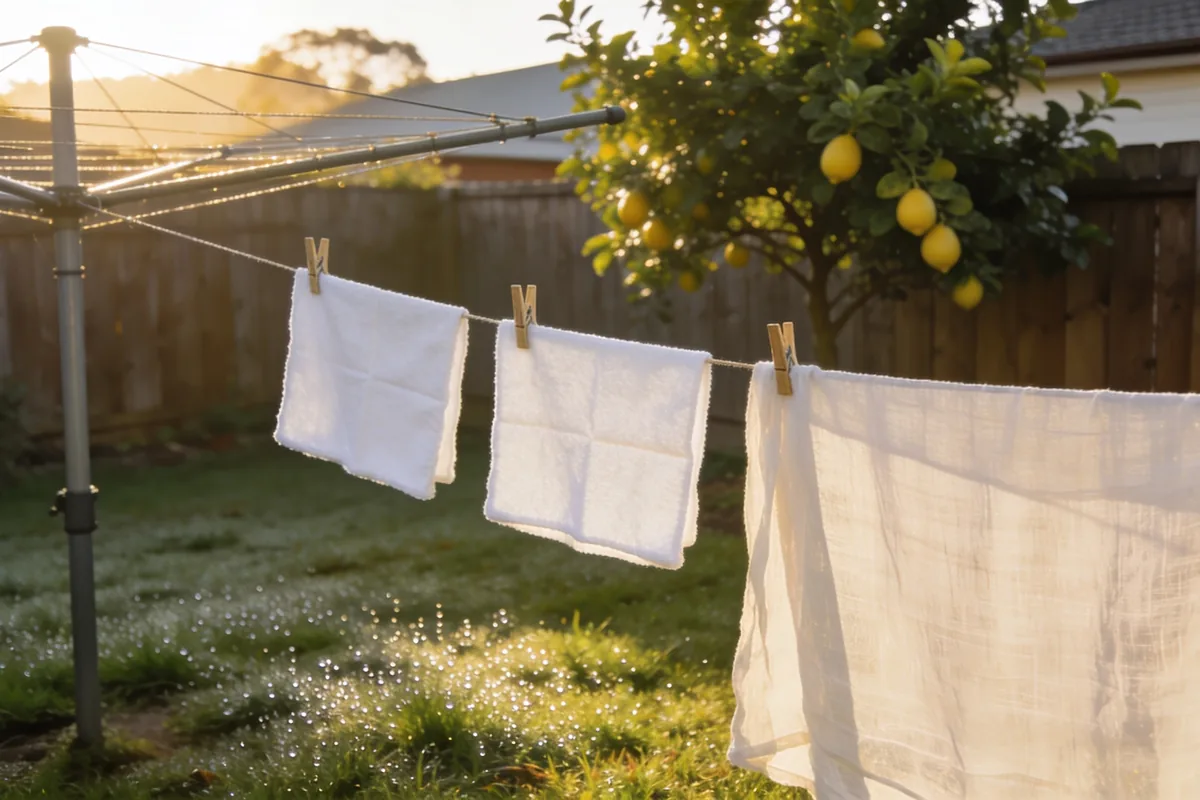
The line is already pegged when the first light reaches the back fence. Flat white squares of cotton hang in a row, with one pale muslin at the end that moves a little whenever the air does. A bucket with a lid sits by the laundry door. Somewhere beyond the gate a pram wheel ticks over the joins in the footpath, and the sound comes and goes as whoever is pushing it passes the house. The grass is wet. A lemon tree leans over the paling fence, and its fruit is the only strong colour in the yard. A magpie works its way along the base of the fence, stopping every few steps to listen to the lawn, and the whole street has the held-breath quiet of a house where somebody has finally gone back to sleep.
Inside, the kettle clicks off. A stack of folded squares sits on the bench, still warm from the machine, and the room smells of washing powder and toast. Next door a bin lid bangs. It’s collection day, and a row of wheelie bins stands along the street like people waiting for a bus. Nobody in the scene is deciding anything. It’s an ordinary Tuesday, and there’s washing to bring in before the sun clears the fence. On the bench, beside the folded squares, a basket waits for the next load, and a small pile of muslins is stacked on top of it, creased where it was last pegged and folded in half. Down the hall, a baby makes the first sound of the day, half a word and half a sigh, and the house begins to move.
(An invented scene.)
Two government studies, twenty years apart
What actually happens, in carbon and water and rubbish, to the nappies on that line and to the ones in those bins? Two UK government studies have tried to answer it, and they didn’t reach the same headline.
Both are life cycle assessments. That’s a method that adds up the environmental cost of a product from the raw materials, through making and use, to what happens when it’s thrown out or retired. To keep the comparison fair, each study asks for the same job to be done: covering one child’s nappy needs for the first two and a half years.
In May 2005 the Environment Agency, England’s environmental regulator, published a life cycle assessment of disposable and reusable nappies, carried out by the contractor ERM. Its summary of the three nappy systems studied was that there was “no significant difference between any of the environmental impacts”. It put the impacts for one child over two and a half years as “roughly comparable with driving a car between 1300 and 2200 miles”. In kilometres, by our own conversion, that’s about 2,100 to 3,500. The advisory board for that study included industry bodies and real-nappy bodies. The agency followed it with an updated assessment in August 2008, and this post takes no figure from that update.
In February 2023 Defra, the UK government department for environment, food and rural affairs, issued Life Cycle Assessment of Disposable and Reusable Nappies in the UK 2023 (project EV0493), written by R Holdway and M Dowling of Giraffe Innovation Ltd. The data sets came from members of two groups: the Absorbent Hygiene Product Manufacturers Association, which represents makers of disposables, and the Nappy Alliance, which promotes reusable nappies. The critical review involved University College London and those same two bodies.
Both are UK studies. They don’t model Australian electricity or Australian water, and that limit follows every figure below. The short version is that the studies describe a trade and don’t name a winner. The next section shows where the trade sits.
What the 2023 numbers say
Defra followed nappies over the first two and a half years of a child’s life and measured them across 18 environmental categories. The best known of those is carbon, reported as global warming potential in kilograms of carbon dioxide equivalent (CO2e).
| Measure (first 2.5 years of one child) | Disposable | Reusable (home laundered) |
|---|---|---|
| Carbon footprint | 456.91 kg CO2e | 344.57 kg CO2e |
| Categories where it had the higher impact (of 18) | 7 | 11 |
| Weight of material used | 128.36 kg | 3.22 kg |
| Where the carbon comes from | Production 294.76 kg; packaging and retail 5.58 kg; transport 7.33 kg; end of life 149.24 kg | About 85 per cent from the use phase (washing and drying) |
Our own arithmetic, from the report’s two carbon totals: 456.91 minus 344.57 is 112.34 kg of CO2e, which is 24.6 per cent of the disposable figure. So in this study the reusable footprint is about a quarter lower.
The disposable column is worth a second look, because the carbon sits at the two ends of the nappy’s life. Production is 294.76 kg and end of life is 149.24 kg. Packaging and retail (5.58 kg) and transport (7.33 kg) together add up to 12.91 kg, about 3 per cent of the total, by our arithmetic. Production works out at roughly 65 per cent and end of life at roughly a third. In other words, a disposable nappy’s footprint is mostly decided before it reaches the house and after it leaves.
That’s a real gap, and it’s only half the picture. Reusables came out higher in 11 of the 18 categories, and those higher scores sit largely in the washing: the electricity, the water and the detergent. Disposables carry their weight somewhere else, in the making of the nappy and at the end of its life, which on the report’s figures accounts for about a third of the total. The reusable nappy is lighter to make and heavier to keep clean. Which of those matters more depends on which category a reader cares about.
Why 2005 and 2023 do not contradict each other
On the surface the two studies disagree. One found no significant difference, and the other found reusables lower on carbon and higher in most categories. Defra’s own report is careful here. It says the 2005 and 2008 work used different indicators and modelling, and that “direct comparisons with the previous reports should be done with caution”.
| Environment Agency, 2005 | Defra, 2023 | |
|---|---|---|
| Headline | No significant difference between any of the environmental impacts | Lower carbon for reusables; higher impact in 11 of 18 categories |
| Disposable carbon over 2.5 years | 626 kg | 456.91 kg |
| Who was in the room | Advisory board with industry and real-nappy bodies | Data from the two industry groups; review including both and UCL |
Read side by side, the table shows where the change came from. The disposable footprint fell about 27 per cent between the two studies, from 626 kg to 456.91 kg. The report also puts its home-laundered reusable footprint about 38.5 per cent below the flat cloth nappy modelled in the earlier work. The report notes that the end of life stage for disposables changed too, with disposal moving from landfill towards incineration, which raised that stage by more than 55 kg. And it counts 37 per cent of children in disposables and 35 per cent in reusables as still in nappies at two and a half years, a detail that shapes how long the footprint runs.
None of that makes 2005 wrong or 2023 right. They measured differently, at different times, with different nappies and a different grid.
What moves the result
The use phase is where a household has a say, and Defra puts a number on it. About 438 kilowatt hours of electricity go into the pre-wash, wash and drying of a reusable stash over the first two and a half years. That is the heart of the use phase, which makes up about 85 per cent of the reusable footprint.
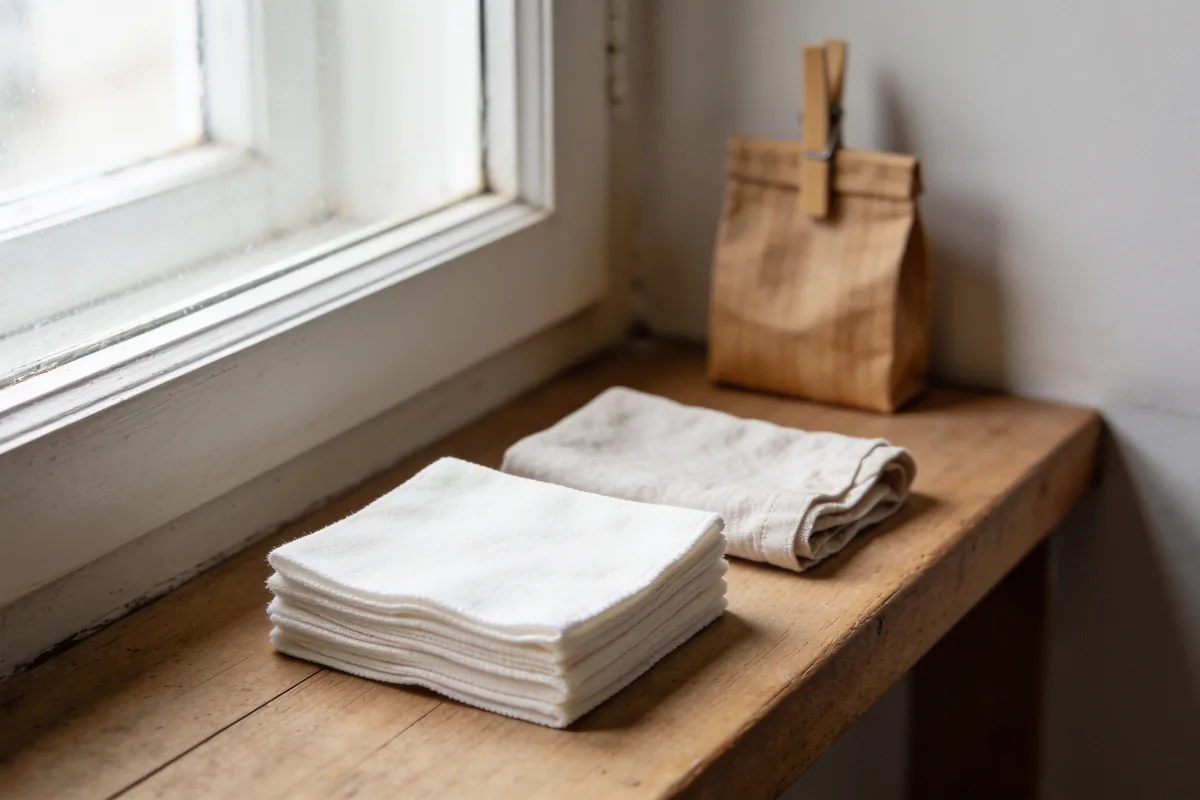
A reader who tumble dries everything might expect the carbon advantage to vanish. In Defra’s sensitivity testing it doesn’t. Doubling the share of nappies that are tumble dried raises the reusable footprint, but the report says it “will still have a lower GWP than disposable nappies”. The report also points to air-drying and efficient machines as ways of trimming the use phase further.
Reuse for a second child is the other lever the report models. Take the same stock into a second child’s nappy years and the reusable figure falls from 344.57 kg to 322.17 kg CO2e. That is a drop of 22.4 kg, or about 6.5 per cent, by our arithmetic, and water use falls by 30.9 per cent. One honest limit: Defra models the stock as bought new, so the report puts no number on hand-me-down or second-hand nappies, and this post doesn’t either.
The washing machine, the line and the second child all change the reusable figure. The disposable figure has no equivalent lever in the report, because most of it is fixed before the nappy reaches the house.
What the studies do not settle
The studies say nothing about Australian conditions. Electricity and water supplies here differ from those in the UK, so the washing end of the ledger could look different in an Australian home, and the UK model can’t show by how much.
The 2023 study also rests on data from the two industry groups. The review by a university and by both groups is a check, and it’s also a reminder of who has an interest in the answer.
And they don’t tell a family what to do. Convenience, hygiene and daycare rules are fair reasons to choose disposables, and a family that uses both is making a sensible trade of its own. Tweed Shire Council, in a media release of 19 October 2023, announced a rebate of up to $100 on reusable nappies and gave its own estimate of 1.5 billion disposable nappies ending up in landfill across Australia each year. That’s one council’s estimate, and this post can’t check it. In the same release it said that the rebate “isn’t about saying people should only use reusable nappies”. That’s a fair reading of the studies too, since neither one crowns a winner.
Reading the Two Studies Together
Back at the line, the squares have dried stiff in the sun and the muslin has stopped moving. The bins have been emptied, and the street is quiet again.
The 2023 study finds reusables about a quarter lower on carbon and higher on 11 of 18 measures. That is a trade, and a household can pick which side of it matters most.
Sources: Defra, Life Cycle Assessment of Disposable and Reusable Nappies in the UK 2023, project EV0493, revised February 2023 (https://www.suffolkrecycling.org.uk/Asset-library/15724-ev0493-nappy-lca-report-final.pdf); Environment Agency, Life Cycle Assessment of Disposable and Reusable Nappies in the UK, May 2005 (https://assets.publishing.service.gov.uk/media/5a7c4096ed915d7d70d1d993/scho0505bjcw-e-e.pdf); Environment Agency, An updated lifecycle assessment for disposable and reusable nappies, 2008 (https://www.gov.uk/government/publications/an-updated-lifecycle-assessment-for-disposable-and-reusable-nappies); Tweed Shire Council media release, 19 October 2023 (https://www.tweed.nsw.gov.au/council/news-updates/latest-news/media-releases/1436975-no-butts-about-it-reusable-nappies-are-a-better-alternative)


NDIS Worker Orientation Module: What to Do While the Online Course Is Offline

Exercise Prescription: How the FITT Principle Builds a Personal Plan

The Spam Act: An Unsubscribe Link Cannot Fix a Message Sent Without Consent
NDIS Worker Orientation Module: What to Do While the Online Course Is Offline

Gutter Overflowing in the Rain? Where to Look First

Engine Coolant Myths: What Water, the Gauge and the Calendar Get Wrong
-
 Healthcare2 days ago
NDIS Worker Orientation Module: What to Do While the Online Course Is Offline
-
 Home & Garden12 months ago
Gutter Overflowing in the Rain? Where to Look First
-
 Automotive12 months ago
Engine Coolant Myths: What Water, the Gauge and the Calendar Get Wrong
-
 Healthcare9 months ago
Stiff Joints in the Morning: What Is Normal and When to See a GP
-
 Home & Garden11 months ago
Galvanised Pipes at Home: Is It Lead You Should Worry About, or Rust?
-
 Healthcare3 days ago
Exercise Prescription: How the FITT Principle Builds a Personal Plan
-
 Home & Garden10 months ago
Cut Your Hot Water Bill: Four Fixes and One to Skip
-

 Family & Parenting12 months ago
Respite Options for Carers of Children with Special Needs